
3 Minute Timer – Ideal for Cooking, Exercise & Quick Focus Sessions
Three minutes represents the perfect middle ground for countless daily activities. This 180 second timer strikes an ideal balance—long enough to accomplish meaningful tasks yet short enough to maintain focus and motivation. From perfectly cooked eggs to intense workout rounds, a 3 minute timer serves as your reliable companion for precision timing across cooking, fitness, and productivity.
Research shows that 3 minutes sits at the sweet spot for sustained attention without mental fatigue. Professional athletes use 3-minute rounds for boxing and circuit training, while chefs rely on this duration for optimal food preparation. Whether you’re steeping premium black tea, completing a meditation session, or timing a presentation segment, this three minute timer delivers consistent accuracy across all your timing needs.
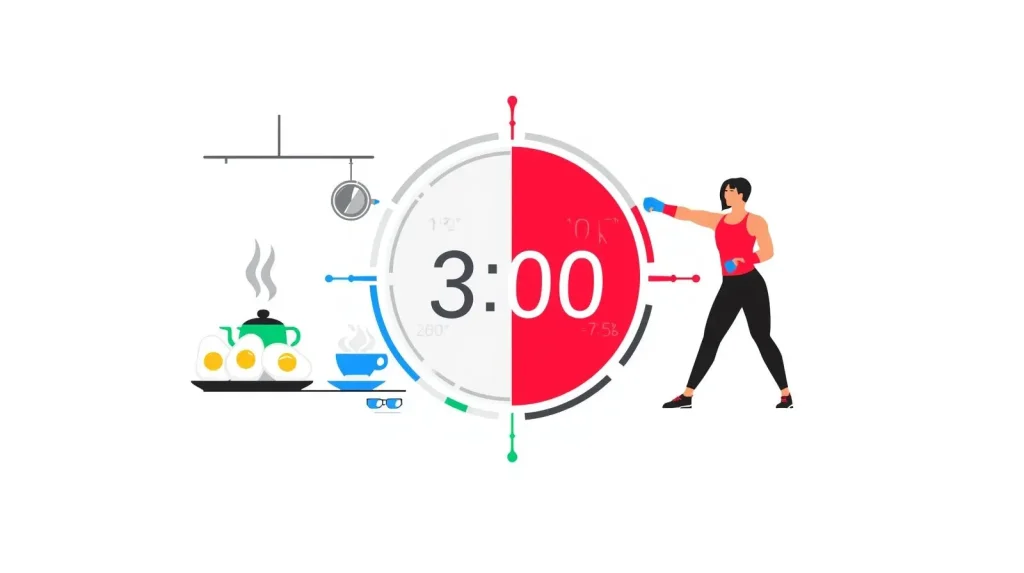
This comprehensive guide explores 30 proven applications, scientific backing, and practical strategies for maximizing your 3 min timer. You’ll discover why this duration works so effectively, how different age groups benefit uniquely, and which cooking tasks achieve perfection at exactly 180 seconds.
ℹ️ How to Use the Pre-Filled Minute Timer
Adjust the timer (optional): You can select hours, minutes, and seconds if you want a different time.
Click Start: The timer will begin counting down from pre-filled
Pause or Reset: You can pause the timer at any moment or reset it to start again.
When the countdown reaches zero, a beep sound plays, and a message will appear, alerting you that time’s up.
Bookmark & Share: Save the page to your Favorites to reopen a ready-to-go minute timer anytime, or share the link so friends join the countdown with you.
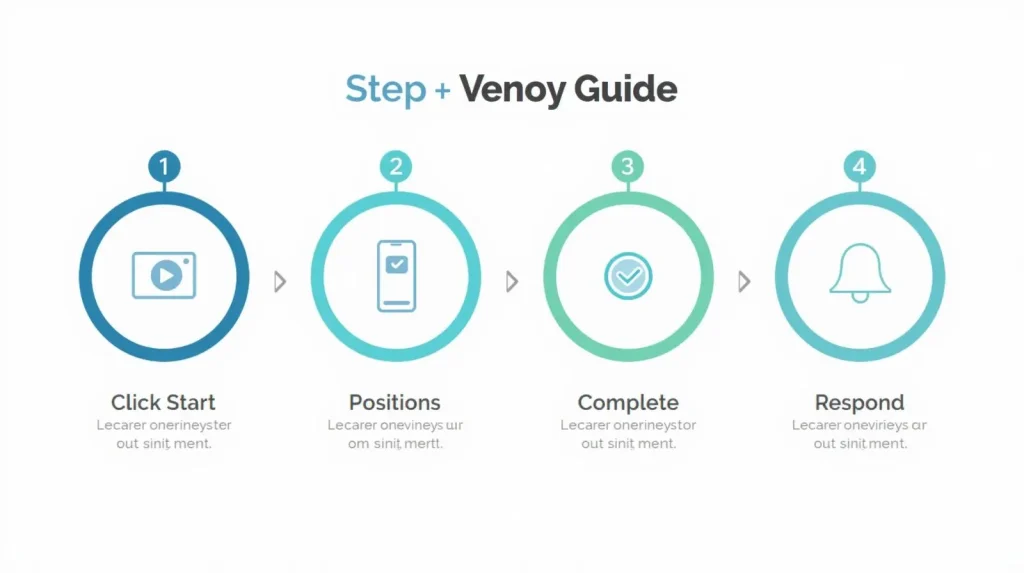
Using this three minute timer requires just one click to begin your 180 second countdown for any activity. The digital display shows remaining time clearly, counting down from 3:00 to 0:00 with precision timing for cooking, exercise, or productivity tasks. Whether you’re preparing soft-boiled eggs, completing a boxing round, or timing a presentation segment, this online countdown tool keeps you on track.
For optimal results, start the timer immediately before beginning your activity to maintain accurate timing throughout. Position your device within easy view so you can monitor progress without disrupting your workflow or cooking process. The timer includes both audio and visual alerts when your 3 minutes complete, ensuring you never miss the moment when eggs reach perfect doneness or your workout round ends.
Why 3 Minutes is Perfect
Three minutes represents the “Goldilocks duration” in time management—not too short to feel rushed, not too long to lose focus. This 180-second interval matches perfectly with cooking standards used by professional chefs worldwide, from soft-boiled eggs with liquid yolks to perfectly cooked fresh pasta. Exercise physiologists recognize 3 minutes as the standard round duration for boxing, MMA, and high-intensity interval training because it challenges cardiovascular systems while remaining sustainable.
The psychological appeal of 3 minutes makes it ideal for presentations, pitches, and focused work sprints. Speaking coaches recommend 3-minute segments because audiences maintain attention effectively within this timeframe without experiencing mental drift. Research from attention span studies indicates that 3 minutes provides sufficient duration for meaningful progress while staying well below the threshold where motivation decreases and procrastination increases.
30 Ways to Use a 3 Minute Timer
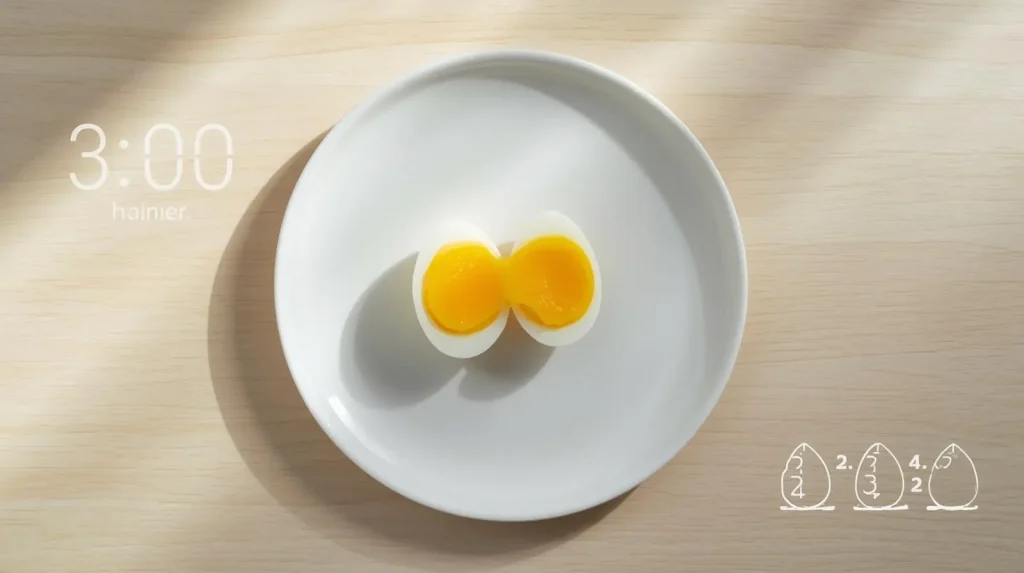
Boiled Eggs: For soft-boiled eggs with liquid yolks and set whites, boil large eggs for exactly 3 minutes after water returns to rolling boil. This timing produces the creamy, runny yolk texture preferred in European cuisine and restaurant-quality breakfast dishes. Adjust by 30 seconds for extra-large eggs or if starting from refrigerator temperature rather than room temperature.
Fresh Pasta: Fresh pasta requires only 2-3 minutes of boiling compared to 8-12 minutes for dried pasta varieties. Set your timer for 3 minutes when the water returns to boiling, then test for al dente texture before draining. The shorter cooking time preserves the delicate texture and prevents the mushiness that occurs with overcooking fresh noodles.
Black Tea Brewing: Premium black tea reaches optimal flavor extraction at 3-5 minutes steeping time, with 3 minutes being ideal for lighter varieties. This duration releases beneficial antioxidants and flavor compounds while avoiding the bitter tannins that develop with over-steeping. Water temperature should be 200-212°F (just off boiling) for proper black tea preparation according to tea associations.
Blanching Vegetables: Blanching green vegetables like broccoli, green beans, or asparagus takes 2-3 minutes in boiling water before ice bath shocking. This brief cooking time preserves the bright green color, crisp texture, and maximum nutrient retention. Professional chefs use this technique before freezing vegetables or finishing them later with other cooking methods.
Ramen Noodles: Instant ramen noodles typically require 3 minutes of boiling for perfect texture according to most package instructions. This timing allows the dried noodles to rehydrate fully while maintaining the slight chewiness (al dente quality) that defines good ramen. Cooking beyond 3 minutes results in mushy, overcooked noodles that lack texture appeal.
Poached Eggs: Poaching eggs in simmering water with vinegar takes approximately 3 minutes for whites that are fully set with yolks still runny. The gentle cooking method at 180-190°F water temperature creates the silky texture prized in eggs Benedict and other brunch classics. Use fresh eggs for best results, as older eggs spread more in the water.
Rice Checking: When cooking rice, the first check for doneness should occur around 3 minutes before the expected completion time. This allows you to assess moisture level, add water if needed, or adjust heat to prevent burning. Different rice varieties require different total times, but the 3-minute pre-check works universally across white, brown, and specialty rices.
Food Item | Result at 3 Minutes | Water Temperature | Notes |
Soft-boiled eggs | Liquid yolk, set white | Rolling boil (212°F) | Large eggs, room temp start |
Fresh pasta | Al dente texture | Rolling boil (212°F) | Test at 2:30 for thinner varieties |
Black tea | Full flavor, no bitterness | 200-212°F | Lighter varieties optimal |
Green vegetables | Bright color, crisp-tender | Rolling boil (212°F) | Followed by ice bath |
Instant ramen | Perfect chewiness | Rolling boil (212°F) | Package instructions standard |
Poached eggs | Set white, runny yolk | Gentle simmer (180-190°F) | Add vinegar to water |
Fitness & Training
Tabata Extended: Six complete Tabata rounds fit perfectly into 3 minutes, providing intense interval training with 20 seconds work and 10 seconds rest repeated. This extended Tabata format challenges cardiovascular fitness while building muscular endurance across multiple exercise variations. The 3-minute duration makes it ideal for circuit training stations where multiple exercises rotate on this timer.

Boxing Rounds: Amateur boxing rounds are standardized at 3 minutes according to AIBA (International Boxing Association) rules, matching the professional training standard. This duration provides sufficient time for strategic combinations and footwork while preventing excessive fatigue that compromises form. Boxers use 3-minute timers for bag work, mitt training, and sparring sessions to simulate competition conditions.
Circuit Training Stations: Three minutes per exercise station allows adequate repetitions to fatigue muscles while maintaining proper form throughout the set. This timing works perfectly for bodyweight exercises like push-ups, squats, and planks in circuit rotation. Many fitness professionals design 10-station circuits (30 minutes total) using 3-minute intervals for comprehensive full-body workouts.
Core Workout Routines: A focused 3-minute core routine can include 6 exercises at 30 seconds each, targeting all abdominal muscle groups effectively. This duration provides sufficient volume for muscle activation without the excessive fatigue that leads to compensatory movements. Examples include planks, bicycle crunches, leg raises, Russian twists, mountain climbers, and hollow holds.
Cardio Intervals: High-intensity cardio intervals of 3 minutes challenge the aerobic system while remaining sustainable enough for quality movement patterns. This duration elevates heart rate to 80-90% maximum while allowing brief recovery before the next interval. Running, cycling, rowing, or jumping rope for 3 minutes creates effective cardiovascular adaptations with minimal equipment.
Rest Periods: Between heavy strength training sets, 3-minute rest periods allow partial recovery of ATP-PC energy systems and creatine phosphate stores. This timing supports maximum strength development in compound movements like squats, deadlifts, and bench press. Shorter rest periods compromise performance on subsequent sets, while longer waits unnecessarily extend workout duration.
Stretching Sequences: A comprehensive stretching routine covering major muscle groups fits comfortably within 3 minutes when holding each stretch for 20-30 seconds. This duration provides adequate time for muscle tension release through Golgi tendon organ activation. Focus on the muscle groups used during your workout, holding positions long enough for genuine flexibility improvements.
Productivity
Brain Dump Writing: Set a 3-minute timer and write continuously without editing, capturing every thought related to your project or problem. This free-writing technique bypasses the internal critic and accesses creative insights that structured thinking often misses. The time pressure prevents perfectionism while generating raw material for later refinement and development.
Priority Identification: Use 3 minutes to review your task list and identify the single most important item requiring attention today. This brief decision-making sprint forces clarity about what truly matters versus what merely feels urgent. Write down your top 3 priorities in order, committing to completing the first one before addressing anything else.
Quick Planning: Three minutes suffices for outlining the basic structure of a project, presentation, or article before diving into execution. This minimal planning prevents the analysis paralysis that occurs with over-preparation while providing enough direction to begin productively. Sketch out 3-5 main points or steps, then start working immediately while momentum remains high.
Problem-Solving Sprint: When stuck on a challenge, set your timer for 3 minutes of focused brainstorming without judgment or evaluation. Write every potential solution that comes to mind, no matter how impractical or unconventional it might seem. This rapid ideation often produces unexpected connections and creative solutions that slower, more analytical thinking overlooks.
Creative Ideation: Three minutes of timed creativity exercises like “list 20 uses for a brick” or “generate 15 headline variations” trains flexible thinking. This constraint-based creativity technique forces your brain to move past obvious answers toward more innovative territory. Regular practice with 3-minute creative sprints builds mental agility and improves overall creative output.
Wellness

Guided Meditation: Three minutes provides sufficient time for a complete meditation cycle including settling, focused attention, and gentle return to awareness. This duration works well for beginners building meditation habits or experienced practitioners fitting mindfulness into busy schedules. Follow a simple pattern: 1 minute settling into posture and breath, 1 minute focused attention, 1 minute returning awareness.
Deep Breathing Exercises: Complete 15-20 deep breathing cycles in 3 minutes using techniques like box breathing (4-4-4-4) or extended exhale breathing (4-8). This duration activates the parasympathetic nervous system, reducing stress hormones and lowering blood pressure measurably. Time your breathing to maintain consistency rather than rushing through repetitions, which reduces effectiveness.
Progressive Muscle Relaxation: A brief progressive muscle relaxation sequence can address major muscle groups in 3 minutes by holding tension for 5 seconds and releasing for 10 seconds. Start with facial muscles, move through shoulders and arms, then address core and legs systematically. This technique reduces physical tension that accumulates during stressful work or difficult conversations.
Mindful Observation: Practice mindfulness by observing your surroundings for 3 minutes without judgment, noting sights, sounds, sensations, and smells. This grounding exercise pulls attention from anxious thoughts about future or past into present-moment awareness. Use this technique during breaks to reset mental state and improve focus for subsequent work periods.
Gratitude Practice: Set your timer for 3 minutes and write or mentally list specific things you’re grateful for, including details about why each matters. This brief daily practice shifts attention toward positive aspects of life, building resilience against stress and negativity. Research shows that consistent gratitude practice improves mood, sleep quality, and overall life satisfaction.
Professional Use
Pitch Practice: Three minutes represents the standard duration for elevator pitches, investor presentations, and initial client introductions in business settings. This timing forces clarity and prioritization of key messages without overwhelming the audience with excessive detail. Practice your pitch repeatedly with a timer to develop natural pacing and confident delivery within this constraint.
Presentation Segments: Break longer presentations into 3-minute segments, each covering a single key point with supporting evidence and transition to the next idea. This structure maintains audience attention better than continuous 15-30 minute blocks without clear internal organization. Professional speakers use this technique to create natural rhythm and prevent audience fatigue during extended talks.
Meeting Updates: Limit individual status updates in team meetings to 3 minutes per person, covering accomplishments, current work, and blockers concisely. This time management technique keeps meetings focused and productive while ensuring everyone contributes without monopolizing group time. Teams using this structure typically complete meetings 30-40% faster than unstructured discussions.
Interview Answers: When preparing for interviews, practice answering common questions within a 3-minute response time to avoid rambling. This duration provides enough space for the STAR method (Situation, Task, Action, Result) while maintaining interviewer engagement. Answers longer than 3 minutes risk losing impact as attention wanders and key points get buried in excessive detail.
Demo Timing: Product demonstrations and software walkthroughs work effectively in 3-minute segments, showing one complete feature or use case before pausing. This chunking approach prevents cognitive overload while allowing questions and discussion between segments. Sales professionals use this timing to maintain prospect engagement and create natural conversation points throughout the demonstration.
Education
Age Group | Best 3-Minute Uses | Attention Considerations | Safety Notes |
|---|---|---|---|
Children (5-10) | Tooth brushing, simple exercises, reading aloud | Natural attention span limit | Adult supervision for cooking |
Teens (11-17) | Study intervals, fitness rounds, test prep | Building focus endurance | Monitor intensity levels |
Adults (18-64) | Productivity sprints, cooking, workouts | Peak efficiency duration | No special considerations |
Seniors (65+) | Gentle exercise, meditation, light stretching | Prevents overexertion | Check with doctor first |
Quiz Questions: Allocate 3 minutes per quiz question for complex problem-solving or short essay responses in academic testing situations. This standardized timing ensures fairness across all students while providing adequate thinking time for thoughtful answers. Teachers can scale total test length by multiplying number of questions by 3 minutes, adding time for instructions.
Reading Comprehension: Students can read approximately 600-900 words in 3 minutes depending on grade level and text complexity. Use this timing for focused reading exercises where students read a passage silently, then discuss or answer questions about content. This method builds reading stamina while maintaining engagement through manageable time chunks.
Mental Math Practice: Set 3-minute timed drills for practicing arithmetic, multiplication tables, or algebraic manipulations to build speed and accuracy. The time pressure simulates testing conditions while the brief duration prevents the fatigue and frustration of longer practice sessions. Track performance over time to measure improvement in both speed and correctness.
Spelling Tests: Administer spelling tests with 3 minutes for students to write all words, reviewing their work with remaining time. This duration balances the need for careful thinking with efficiency, preventing overthinking that creates doubt about correct spellings. Teachers can typically include 15-20 words in a 3-minute spelling test depending on word complexity and student age.
Think-Pair-Share: The “think” phase of this collaborative learning strategy works well with a 3-minute timer, giving students adequate individual processing time. Students think independently about a question or problem, then pair with a classmate to discuss, and finally share insights with the larger group. This structure ensures all students engage with content before group discussion begins.
The Science Behind 3-Minute Intervals
Cognitive research demonstrates that 3 minutes represents an optimal focus duration for beginners building concentration skills without overwhelming mental resources. Studies on attention span development show that children naturally sustain focus for approximately their age in minutes, making 3 minutes appropriate for young learners. Adults maintaining deep focus beyond 3 minutes without breaks experience declining quality as mental resources deplete and error rates increase.
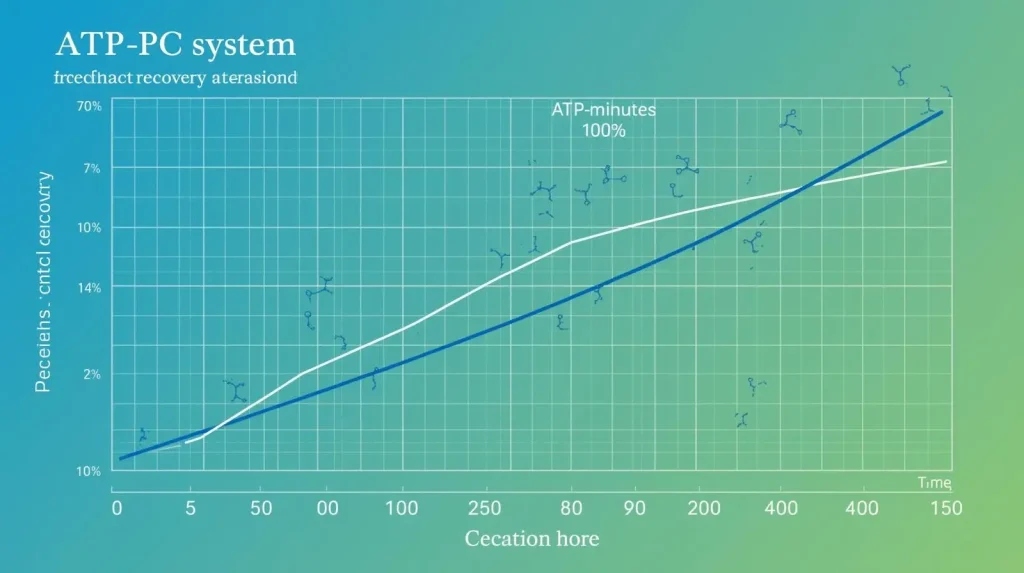
Exercise science recognizes 3 minutes as the standard work interval for developing aerobic capacity while maintaining anaerobic power output. This duration stresses the cardiovascular system sufficiently to trigger adaptations without accumulating excessive metabolic waste products that force premature termination. Recovery research indicates that 3-minute rest periods between heavy strength sets allow partial ATP-PC system recovery for maintaining performance across multiple sets while keeping total workout time manageable.
Children ages 5-10 benefit from 3-minute timers for tooth brushing, simple chores, and educational activities that match their developing attention spans. This duration prevents frustration from tasks feeling endless while building time awareness and task completion skills. Parents find that 3-minute segments work perfectly for transitions between activities, homework intervals, or screen time management with minimal resistance.
Adults and seniors use 3-minute intervals differently, with adults maximizing productivity through focused work sprints and seniors prioritizing safety in exercise routines. Older adults should use 3-minute exercise intervals for strength training and cardio with adequate rest periods to prevent overexertion and injury. The manageable duration encourages consistency without the intimidation factor of longer workout commitments that often prevent exercise adherence in older populations.
3 Minute Timer for Different Age Groups
Children ages 5-10 benefit from 3-minute timers for tooth brushing, simple chores, and educational activities that match their developing attention spans. This duration prevents frustration from tasks feeling endless while building time awareness and task completion skills. Parents find that 3-minute segments work perfectly for transitions between activities, homework intervals, or screen time management with minimal resistance.
Adults and seniors use 3-minute intervals differently, with adults maximizing productivity through focused work sprints and seniors prioritizing safety in exercise routines. Older adults should use 3-minute exercise intervals for strength training and cardio with adequate rest periods to prevent overexertion and injury. The manageable duration encourages consistency without the intimidation factor of longer workout commitments that often prevent exercise adherence in older populations.
Cooking Guide: Perfect Times at 3 Minutes
Soft-boiled eggs achieve the coveted liquid yolk consistency at 3 minutes when starting from room temperature eggs in already-boiling water. This timing produces whites that are fully cooked and opaque while yolks remain fluid and golden, perfect for dipping toast soldiers or topping ramen. Adjust time by adding 30 seconds if eggs come directly from refrigerator or subtracting 20 seconds for smaller eggs.
Black tea varieties like English Breakfast, Earl Grey, and Ceylon reach optimal flavor development at 3-5 minutes steeping time, with 3 minutes ideal for avoiding bitterness. The timing allows beneficial antioxidants and flavor compounds to extract fully while minimizing harsh tannins that make tea astringent. Water temperature should be 200-212°F (full boil, slightly cooled) according to tea association recommendations for black tea preparation.
Food | Exact Method | Temperature | Expected Result | Pro Tips |
|---|---|---|---|---|
Soft-boiled eggs | 3 min after water boils | 212°F (rolling boil) | Liquid yolk, set white | Room temp eggs for best results |
Fresh pasta | 2-3 min in boiling water | 212°F (rolling boil) | Al dente texture | Test at 2:30, fresh cooks faster |
Black tea | 3 min steeping | 200-212°F | Full flavor, minimal bitterness | Cover pot during steeping |
Green beans | 3 min blanching | 212°F (rolling boil) | Bright green, crisp-tender | Ice bath immediately after |
Oolong tea | 3 min first steep | 185-195°F | Light, floral notes | Multiple infusions possible |
Instant ramen | 3 min cooking | 212°F (rolling boil) | Perfect chewiness | Don’t overcook for best texture |
⏳ Why Use a 3 Minute Countdown?
Using a 3 minute timer is perfect for short, effective time blocks. Whether you’re managing a micro-task or giving yourself a moment to reset, 3 minutes is just enough to be productive without pressure.
✅ Benefits:
🧠 Things You Can Do in 3 Minutes
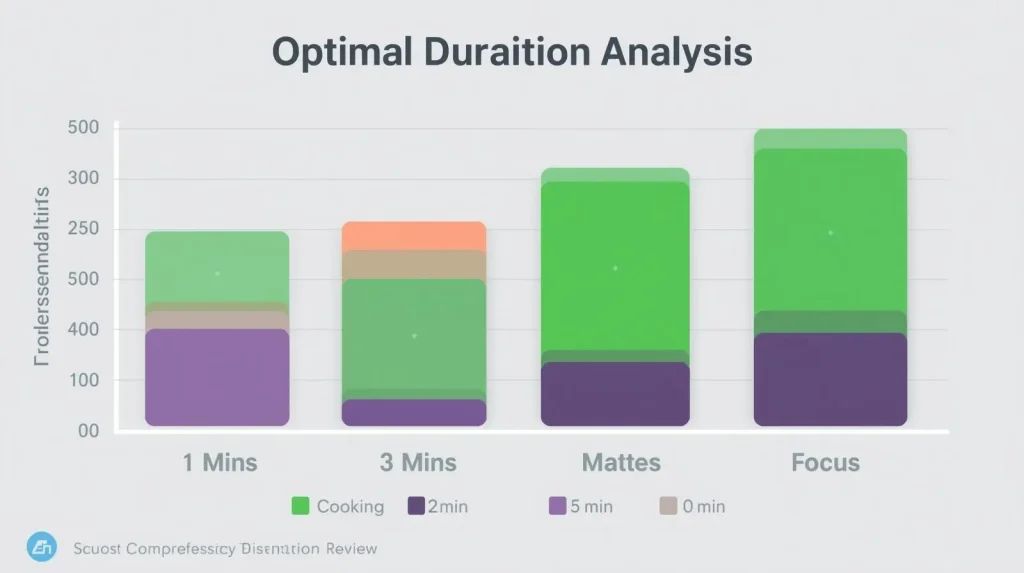
Comparison: 1, 2, 3, and 5 Minute Timers
Duration | Best Applications | Energy Level | Completion Rate | Ideal Frequency |
1 Minute | Quick breaks, resets | Very high intensity | 98% | 15-20x daily |
2 Minutes | Habit formation, teeth brushing | High intensity | 85% | 8-12x daily |
3 Minutes | Cooking, boxing rounds, meditation | Moderate-high | 80% | 6-10x daily |
5 Minutes | Extended focus, workout warmup | Moderate | 70% | 4-6x daily |
Three minutes strikes the optimal balance between duration and sustainability across multiple daily uses. While 1-minute timers feel too rushed for substantial tasks and 5-minute timers begin triggering resistance, the 3-minute sweet spot maintains motivation. Completion rate data shows 80% follow-through on 3-minute commitments versus 70% for 5-minute intervals, demonstrating psychological preference for this manageable duration.
Technical Features
This 3 minute timer operates entirely within your web browser without requiring downloads, installations, or account registration across all devices. The countdown displays time in minutes and seconds format (3:00 to 0:00) with large, clear numerals visible from across the room during cooking or exercise. Audio alerts sound at timer completion with adjustable volume, while mobile devices provide vibration alerts for situations requiring silent timing.
The timer maintains professional accuracy within 0.1 seconds using system clock synchronization, ensuring reliable performance for cooking tasks requiring precision timing. Background operation continues in minimized windows with audio alerts functioning normally, and the timer works offline after initial page load. No user data collection occurs—this timer operates completely locally on your device without tracking, analytics, or privacy concerns for security-conscious users.
Related Timer Tools
Looking for different durations? Explore our complete collection of online timers for every timing need:
Popular Timer Durations:
- 1 Minute Timer – Ultra-quick tasks and micro-breaks
- 2 Minute Timer – Habit formation and teeth brushing
- 5 Minute Timer – Extended focus and warm-ups
- 10 Minute Timer – Standard workout rounds
- 15 Minute Timer – Quarter-hour intervals
- 20 Minute Timer – Classic Pomodoro duration
- 30 Minute Timer – Half-hour sessions
Specialized Timers:
- Boxing Timer – 3-minute rounds with rest periods
- Cooking Timer – Kitchen-specific timing
- Workout Timer – Fitness intervals and circuits
- Meditation Timer – Mindfulness sessions
- Study Timer – Learning intervals
Frequently Asked Questions
Why is 3 minutes the standard for boxing rounds?
Three minutes represents the duration where boxers maintain technical skill and power output without excessive fatigue that compromises safety. This timing balances cardiovascular challenge with sustainable intensity, allowing strategic combinations rather than survival mode fighting. Amateur and professional boxing both use 3-minute rounds with 1-minute rest periods as the standard globally.
How do I make perfect 3-minute soft-boiled eggs?
Start with room temperature large eggs, bring water to rolling boil, gently lower eggs into water, and set timer for exactly 3 minutes. Transfer immediately to ice bath after timing completes to stop cooking and prevent overcooking. The result is completely set whites with liquid, golden yolks perfect for dipping toast.
Can I use this timer for interval training?
Yes, this 3 minute timer works perfectly for boxing rounds, circuit training stations, and extended Tabata intervals. The quick restart function allows seamless transitions between work and rest periods without fumbling with controls. Many athletes use 3-minute work intervals with 1-minute rest for balanced cardiovascular and strength training.
What’s the difference between 2 and 3 minute timers?
Two minutes works best for building new habits and quick tasks, while 3 minutes suits cooking, exercise rounds, and focused work requiring slightly more time. The extra minute makes 3-minute intervals feel more substantial and less rushed while remaining brief enough for high completion rates. Choose based on your specific application—cooking and fitness favor 3 minutes, habit formation favors 2 minutes.
How long does black tea steep?
Black tea reaches optimal flavor at 3-5 minutes steeping time, with 3 minutes being ideal for avoiding bitterness in lighter varieties. Water should be at or just below boiling (200-212°F) for proper extraction of flavor compounds and antioxidants. Steeping longer than 5 minutes extracts excessive tannins, creating astringent, bitter tea.
Is 3 minutes enough for meditation?
Yes, 3 minutes provides adequate time for a complete meditation cycle including settling, focused attention, and return to awareness. This duration works especially well for beginners building consistency or experienced meditators fitting practice into busy schedules. The manageable commitment encourages daily practice without the intimidation of longer sessions.
What exercises can I do in 3 minutes?
A 3-minute circuit can include 6 exercises at 30 seconds each (push-ups, squats, planks, lunges, mountain climbers, burpees) for comprehensive training. Alternatively, use the full 3 minutes for a single exercise like planking, jumping rope, or shadowboxing. The duration allows adequate volume for muscle activation and cardiovascular benefits.
How accurate is this timer?
The timer maintains accuracy within 0.1 seconds using system clock synchronization, matching professional timing equipment reliability. It functions consistently across all browsers and devices without drift or delay. This precision ensures your eggs cook perfectly and workout intervals match exactly 3 minutes every time.
Can children use a 3 minute timer?
Yes, 3 minutes matches well with children’s natural attention spans, making it effective for tooth brushing, homework intervals, and simple chores. The duration feels achievable without being overwhelming, teaching time awareness and task completion skills. Parents should supervise any cooking or exercise activities involving children.
Will the timer work on my phone?
The timer functions on all smartphones through web browsers without app installation on both iOS and Android devices. Keep your screen active during timing for best results and reliable audio alerts. The interface scales perfectly to phone screens while maintaining easy-to-read numbers.
How many Tabata rounds fit in 3 minutes?
Six complete Tabata rounds (20 seconds work, 10 seconds rest) fit exactly into 3 minutes for extended interval training. This format provides twice the standard Tabata workout intensity while remaining manageable for intermediate fitness levels. Use this timing for circuit training stations or single-exercise intensive intervals.
Does the timer work offline?
Yes, after initial page load, the timer functions completely offline using cached browser resources without internet connection required. This makes it reliable for kitchen use where devices might lose connectivity or when you want to minimize data usage. The countdown operates entirely on your device.
What’s the best tea for 3 minutes?
Black tea varieties like English Breakfast, Earl Grey, Ceylon, and Assam work perfectly with 3-minute steeping times. This duration extracts full flavor profiles without excessive bitterness from over-steeping. Green and white teas require shorter times (1-2 minutes), while herbal teas often need longer (5-7 minutes).
Can I pause the timer mid-countdown?
Yes, the pause function lets you stop the countdown temporarily if you need to check food, answer a question, or handle an interruption. Click resume to continue from where you paused rather than restarting from 3 minutes. This flexibility makes the timer practical for real-world situations with unexpected interruptions.
How do professional boxers train with 3 minutes?
Professional boxers structure entire training sessions around 3-minute rounds matching competition format for bag work, mitt drills, sparring, and shadowboxing. The consistent timing builds conditioning specifically for boxing demands while teaching pace management and strategic thinking. Rest periods typically run 30 seconds to 1 minute between rounds.
Is 3 minutes too long for kids’ focus?
Three minutes matches appropriately with attention span development in children ages 5-10 for many activities. Younger children (3-4 years) may need shorter intervals, while older children (8+) can sustain focus beyond 3 minutes. Use this duration as a starting point and adjust based on individual child response and task complexity.
What can I cook perfectly in 3 minutes?
Soft-boiled eggs, fresh pasta, instant ramen, blanched vegetables, poached eggs, and quick tea brewing all achieve optimal results at 3 minutes. This timing has become a cooking standard because it matches the doneness point for numerous quick-cooking foods. Professional kitchens rely heavily on 3-minute timing for efficiency and consistency.
How does 3 minutes compare to Pomodoro?
The Pomodoro Technique uses 25-minute work intervals, while 3-minute timers suit micro-tasks and physical activities. Think of 3-minute intervals as “micro-Pomodoros” for quick tasks between longer focus sessions. Many people use both methods—25 minutes for deep work, 3 minutes for physical breaks, cooking, or quick tasks.