
4 Minute Timer – The Tabata Protocol Standard for HIIT & Quick Wins
Four minutes transformed fitness science forever when Dr. Izumi Tabata published his landmark 1996 research proving that ultra-short, high-intensity intervals could deliver extraordinary results. This 240 second timer has become the gold standard for HIIT training, known worldwide as the Tabata Protocol—eight rounds of 20 seconds maximum effort followed by 10 seconds rest. The revolutionary findings showed a 28% increase in anaerobic capacity and 14% improvement in VO2max after just six weeks, proving that four minutes of proper intensity matches or exceeds benefits of hour-long moderate exercise.
Beyond fitness applications, the four minute timer serves countless daily purposes from perfect soft-boiled eggs with jammy yolks to focused productivity sprints. Professional athletes, busy executives, and home cooks rely on this 4 min timer for precision timing across cooking, meditation, presentations, and quick tasks. Whether you’re completing a Tabata workout, steeping premium tea, or practicing an elevator pitch, this timer delivers the exact 240-second duration that science and experience have proven optimal.

This comprehensive guide explores the research behind Tabata training, provides 35 practical applications, and explains why 4 minutes represents a perfect duration for maximum intensity efforts. You’ll discover proper Tabata technique, common mistakes to avoid, cooking applications requiring exactly four minutes, and how this timer fits into daily routines for people of all fitness levels and age groups.
ℹ️ How to Use the Pre-Filled Minute Timer
Adjust the timer (optional): You can select hours, minutes, and seconds if you want a different time.
Click Start: The timer will begin counting down from pre-filled
Pause or Reset: You can pause the timer at any moment or reset it to start again.
When the countdown reaches zero, a beep sound plays, and a message will appear, alerting you that time’s up.
Bookmark & Share: Save the page to your Favorites to reopen a ready-to-go minute timer anytime, or share the link so friends join the countdown with you.
Using this four minute timer requires understanding whether you need simple countdown mode or structured Tabata intervals with automatic 20/10 switching. For basic timing, click start and the display counts down from 4:00 to 0:00 for cooking, presentations, or single-exercise efforts. For Tabata Protocol training, enable interval mode to automatically alternate between 20-second work periods and 10-second rest periods across eight complete rounds, with audio cues marking each transition.
Advanced features include keyboard shortcuts for hands-free operation during workouts—spacebar starts/pauses, R key resets to 4 minutes, and F key toggles fullscreen mode for visibility across gym spaces. Mobile users benefit from vibration alerts during rest transitions, while the timer continues running in background tabs or minimized windows. Position your device within clear view but outside your exercise path to monitor progress without interrupting movement quality or creating safety hazards during high-intensity bursts.
The Tabata Protocol – Revolutionary 4 Minute Science
The Original Research
Dr. Izumi Tabata conducted his landmark study in 1996 at the National Institute of Fitness and Sports in Japan, testing a protocol developed by Olympic speed skating coach Koichi Irisawa. The research compared moderate-intensity continuous training (60 minutes at 70% VO2max) against high-intensity intermittent training using eight rounds of 20 seconds at 170% VO2max followed by 10 seconds rest. Published in Medicine and Science in Sports and Exercise, the study revealed that this brief four-minute protocol produced a stunning 28% increase in anaerobic capacity while simultaneously improving aerobic capacity by 14%, matching the VO2max gains of the hour-long moderate exercise group.
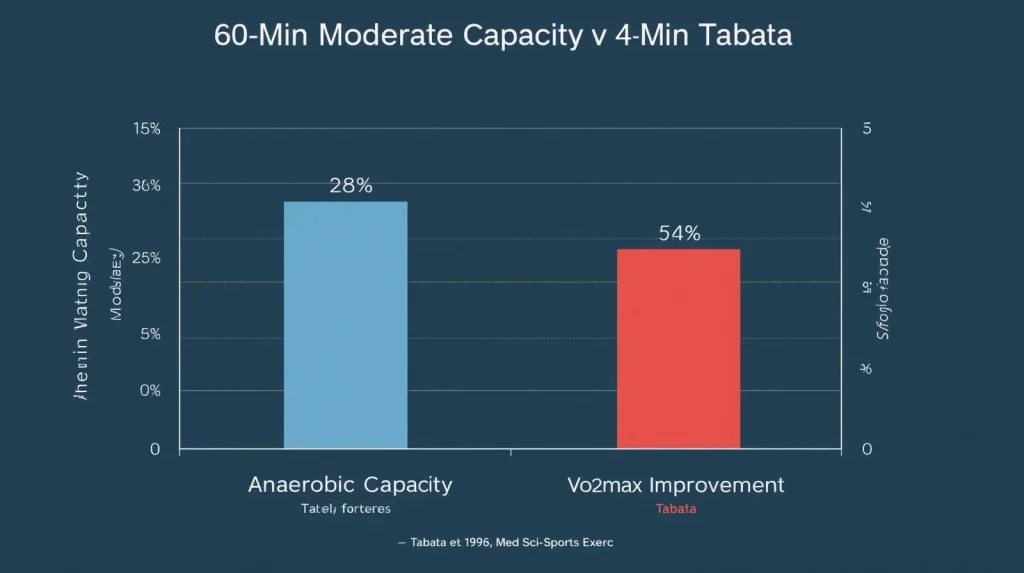
The revolutionary aspect wasn’t just time efficiency but the dual benefit—traditional endurance training improved only aerobic capacity without affecting anaerobic systems, while Tabata intervals enhanced both energy systems simultaneously. Subjects performed training five days weekly for six weeks, with the HIIT group working to complete exhaustion, typically managing only 7-8 rounds before physical failure. The intensity requirement of 170% VO2max means working above what the body can sustain with oxygen alone, forcing maximal recruitment of both aerobic and anaerobic metabolic pathways for unprecedented adaptation stimulus in minimal time.
How to Do Tabata Training
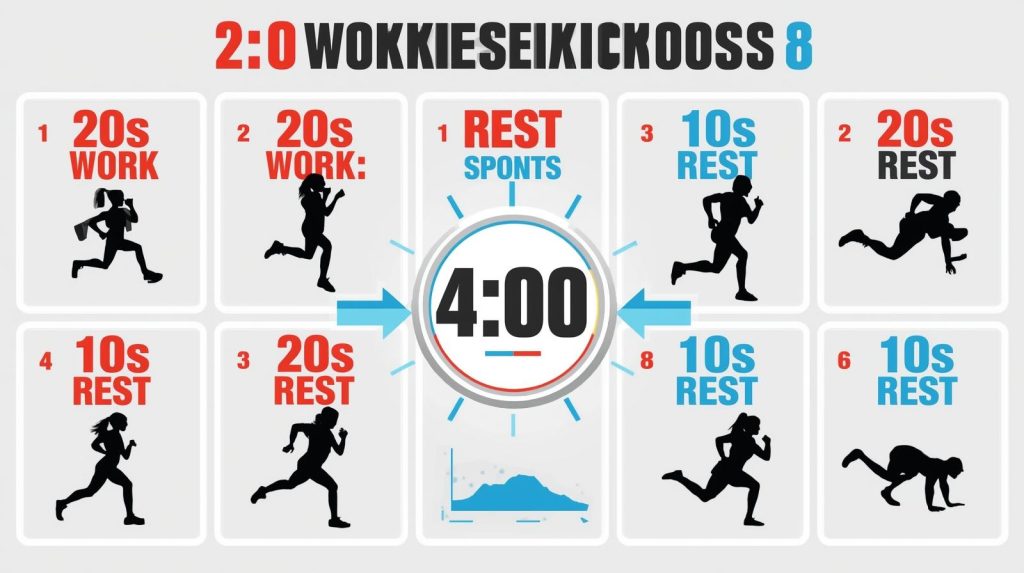
Begin every Tabata session with a thorough 5-minute warm-up including dynamic stretching and gradual intensity increases to prepare muscles and cardiovascular systems for maximal effort. Select a single exercise you can perform explosively—classic choices include burpees, sprints, cycling, rowing, or kettlebell swings performed with perfect form under fatigue. Set your timer for eight rounds of 20 seconds maximum intensity work followed by 10 seconds complete rest, committing mentally to sustaining peak effort across all rounds even as lactate accumulates and breathing becomes labored.
The “all-out” requirement is non-negotiable—research shows the protocol only works at 170% VO2max intensity where you physically cannot maintain the pace beyond 7-8 rounds. During work intervals, move as explosively as possible while maintaining safe form, and use rest periods for active recovery like walking or standing rather than complete collapse. Finish with 2-3 minutes of cool-down movement and stretching to gradually lower heart rate and begin recovery processes, recognizing that proper Tabata leaves you completely exhausted with elevated lactate levels averaging 12.1 mmol/L indicating maximum metabolic stress.
35 Perfect Uses for a 4 Minute Timer
HIIT & Tabata Workouts
Classic Tabata Protocol: The original bicycle ergometer protocol remains the gold standard—eight rounds of maximum effort cycling with proper warm-up and cool-down bookending the four-minute intensity block. Modern applications use stationary bikes, spin bikes, or Assault bikes with resistance set to allow explosive pedaling without losing form. Track your power output or speed across rounds to ensure you’re maintaining true 170% VO2max intensity rather than pacing yourself, as submaximal effort negates the specific metabolic adaptations that make Tabata uniquely effective.
Burpee Tabata: Burpees deliver full-body metabolic conditioning perfect for Tabata structure—perform as many quality repetitions as possible during each 20-second work period, aiming for 8-12 burpees depending on fitness level. Rest periods allow just enough recovery to attack the next round with maximum intensity rather than survival mode pacing. This bodyweight exercise eliminates equipment requirements while providing the explosive, whole-body movement ideal for triggering both aerobic and anaerobic adaptations through repeated maximum efforts.
Sprint Intervals: Whether running outdoors, on treadmills, or up stadium stairs, 20-second sprint intervals with 10-second recovery create the cardiovascular overload central to Tabata benefits. The brief duration prevents the technique breakdown that occurs during longer sprints while maintaining intensity high enough to exhaust fast-twitch muscle fibers. Outdoor athletes can use marked distances (60-80 meters) rather than time to ensure consistent maximum speed across all eight rounds despite accumulating fatigue.
Jump Rope Tabata: Speed jumping rope for 20 seconds challenges cardiovascular systems while developing coordination, rhythm, and lower body power through rapid repetitive impact. Athletes typically complete 60-80 jumps per work interval maintaining the fast pace essential for proper Tabata intensity. The 10-second rest periods provide just enough recovery for hand and calf muscles to sustain maximum speed across subsequent rounds without tripping or losing rope control.
Mountain Climbers: This bodyweight exercise combines core stability with dynamic leg drive, creating full-body metabolic demand suitable for home Tabata workouts without equipment. Drive knees toward chest as quickly as possible while maintaining plank position throughout the 20-second work intervals. The explosive hip flexion and extension repeated rapidly elevates heart rate to maximum levels while building core endurance and hip flexor strength through isometric shoulder stabilization demands.
Kettlebell Swings: Russian kettlebell swings (hip-height) performed explosively for 20 seconds deliver posterior chain power development alongside cardiovascular stress. Select a weight allowing 15-20 powerful swings per interval while maintaining proper hip hinge mechanics rather than squatting. The ballistic nature of swings creates the explosive power output needed for true Tabata intensity while the 10-second rests prevent lower back fatigue that compromises form during subsequent rounds.
Rowing Machine: Concept2 and similar rowers provide measurable Tabata intensity through watt output or split time tracking across eight rounds. Target splits 15-20 seconds faster than your 2000-meter race pace, maintaining maximum stroke power through full hip drive and aggressive handle pull. The seated position reduces injury risk compared to running or jumping while the total-body pulling motion creates metabolic demands comparable to original cycling protocol used in Tabata’s research.
Stationary Bike Sprints: Match the original research protocol using any exercise bike with adjustable resistance—set tension allowing explosive pedaling without bouncing from the saddle. Track RPM or power output to ensure you’re hitting maximum sustainable speed for all 20-second intervals rather than pacing yourself across rounds. The non-impact nature protects joints while leg-specific demand creates the localized muscle fatigue and systemic cardiovascular stress that define proper Tabata training intensity.
Exercise Type | Equipment Needed | Difficulty Level | Primary Benefits | Beginner Reps/Interval |
|---|---|---|---|---|
Burpees | None | Advanced | Full body, cardio | 6-8 reps |
Jump Rope | Jump rope | Intermediate | Cardio, coordination | 60-80 skips |
Cycling | Stationary bike | All levels | Leg power, cardio | Max RPM |
Rowing | Rowing machine | Intermediate | Total body, back | 8-10 strokes |
Mountain Climbers | None | Intermediate | Core, cardio | 20-25 reps |
Kettlebell Swings | Kettlebell | Intermediate | Posterior chain, power | 15-20 swings |
Sprints | Track/treadmill | Advanced | Speed, explosiveness | 60-80 meters |
Box Jumps | Plyo box | Advanced | Lower body power | 8-12 jumps |
Cooking Applications
Soft-Boiled Eggs (Jammy Yolk): Four minutes of boiling produces the coveted jammy egg texture—fully set whites surrounding a thick, molten yolk perfect for ramen, toast, or grain bowls. Start with room temperature large eggs, lower gently into already-boiling water, set timer immediately, and transfer to ice bath when alarm sounds. This timing creates yolks that are no longer liquid (which occurs at 3 minutes) but haven’t yet firmed to the hard-boiled consistency (6+ minutes), achieving the creamy, spreadable texture prized in modern cuisine.
Instant Ramen: Most instant ramen packages specify 3-4 minutes cooking time, with 4 minutes producing optimal noodle texture without mushiness. The extra minute beyond three allows full rehydration of thicker noodle varieties while preventing the sogginess that develops past 5 minutes. Add ingredients in stages—hard vegetables first, then noodles at 4-minute mark, soft vegetables and eggs in final 2 minutes for properly cooked components throughout.
Microwave Steam Vegetables: Broccoli, cauliflower, and Brussels sprouts achieve crisp-tender texture in 4 minutes on high power with 2 tablespoons water in covered dish. This timing preserves bright green color and nutritional content while softening fibrous structures enough for easy eating. The steam generated in sealed containers cooks vegetables evenly without the nutrient loss associated with boiling or the drying that occurs with longer microwave times.
Sous Vide Egg Finishing: When preparing eggs sous vide at 145-147°F, a 4-minute ice bath immediately after removes them from precise temperature control, preventing carryover cooking. This shocking process stops the gentle cooking that would otherwise continue even after removal from water bath. The brief chilling firms exterior enough for careful peeling while maintaining the custardy interior texture that makes sous vide eggs uniquely creamy.
Blanching Asparagus: Medium-thickness asparagus spears require 3-4 minutes of blanching in heavily salted boiling water before ice bath shocking. This timing cooks through the fibrous stalks while preserving the snappy texture and vibrant green color. Thicker spears need the full 4 minutes while pencil-thin varieties require only 2-3 minutes, making thickness assessment important before starting your timer.
Rice Doneness Check: When cooking rice, the first doneness check should occur around 4 minutes before expected completion time. This allows assessment of remaining moisture, adjustment of heat if needed, or addition of small amounts of water if the pot has dried prematurely. Different rice varieties require different total cooking times (white: 18 minutes, brown: 45 minutes) but the 4-minute pre-check works universally as a preventive measure against burning.
Food Item | Method | Temperature | Result | Pro Tips |
|---|---|---|---|---|
Jammy eggs | Boiling | 212°F (rolling boil) | Molten yolk, set white | Room temp eggs, ice bath finish |
Instant ramen | Boiling | 212°F | Al dente noodles | Don’t overcook for best texture |
Steam vegetables | Microwave | High power | Crisp-tender | Use covered dish with water |
Blanched asparagus | Boiling | 212°F + salt | Bright green, tender | Ice bath immediately after |
Poached salmon | Simmering | 160-170°F | Medium-rare center | Gentle simmer, not rolling boil |
Quick oats | Microwave | High power | Creamy texture | Add liquid ratio 1:2 oats:water |
Productivity & Focus
Micro-Pomodoro Sessions: Four-minute focus sprints followed by 1-minute breaks create ultra-short productivity cycles ideal for tasks requiring intense concentration without mental fatigue. This compressed Pomodoro variation works perfectly for email triage, document editing, or design decisions where longer 25-minute blocks feel overwhelming. Complete 6-8 cycles (30-40 minutes total) for substantial progress on projects while maintaining freshness that sustains quality throughout the working session.
Quick Email Triage: Set your timer for 4 minutes and process as many inbox messages as possible using immediate action or filing decisions without overthinking. This rapid decision-making mode prevents the perfectionist editing and over-analysis that consumes hours on routine correspondence. The time pressure forces clarity about which emails truly require thoughtful responses versus immediate deletion, filing, or two-sentence replies.
Rapid Decision Making: When stuck on choices, commit to 4 minutes of focused deliberation covering pros, cons, and gut instinct before making your call. This prevents analysis paralysis where unlimited time leads to circular thinking without progress toward resolution. Write down decision criteria in the first minute, evaluate options in the next two minutes, and make your choice in the final minute using the structure to move past indecision.
Brainstorming Sprints: Four minutes of rapid ideation generates 20-30 ideas when writing continuously without self-editing or evaluation. This quantity-over-quality approach accesses creative thinking that careful analysis often suppresses through premature judgment. Use prompts like “30 headlines for this article” or “ways to solve client problem X” and capture every thought no matter how impractical, refining the raw material later.
Document Scanning: Preview lengthy documents, reports, or articles in 4 minutes by reading introductions, conclusions, headings, and first sentences of paragraphs for main ideas. This strategic skimming technique identifies key information and overall structure before deciding whether full reading is necessary. Many documents communicate essential points in these sections, making 4-minute scanning sufficient for understanding content without investing hours in complete reading.
Task Prioritization: Review your full task list for 4 minutes and identify the single most important item requiring immediate attention today. This daily prioritization ritual prevents reactive mode where urgent-but-unimportant tasks consume time that should address trulycritical work. Use frameworks like Eisenhower Matrix or “eat the frog” principles to make consistent choices about how to allocate limited daily energy toward maximum-impact activities.
Wellness & Meditation
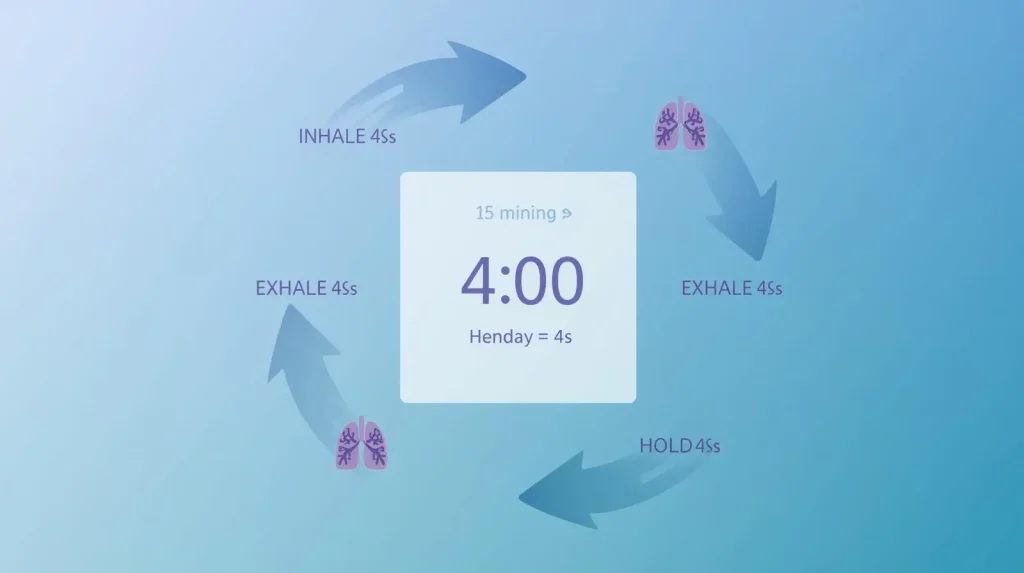
Box Breathing Extended: Complete 15 full cycles of box breathing (4-second inhale, 4-second hold, 4-second exhale, 4-second hold) totaling exactly 4 minutes for deep stress reduction. This extended practice creates measurable autonomic nervous system shifts toward parasympathetic activation, lowering heart rate and blood pressure. The rhythmic pattern serves as meditation anchor point, occupying mind sufficiently to prevent anxious thoughts while delivering physiological calm through controlled respiration mechanics.
4-7-8 Breathing Technique: Dr. Andrew Weil’s relaxation breath pattern fits perfectly into 4 minutes—inhale for 4 counts, hold for 7, exhale for 8, repeated 8-10 times for sleep preparation or anxiety reduction. This breathing ratio emphasizes extended exhalation that stimulates vagus nerve and triggers relaxation response more effectively than equal breath patterns. The specific counts force mental focus on technique rather than worry, making it dual-purpose for both physiological calm and distraction from anxious thinking.
Guided Visualization: Four minutes provides sufficient time for a complete visualization cycle including settling, journey to peaceful scene, sensory immersion, and gradual return to present awareness. Choose a specific environment (beach, forest, mountain) and mentally construct detailed sensory experience—sights, sounds, textures, scents—to create immersive mental escape. This brief mental vacation interrupts stress cycles and provides the cognitive reset that makes subsequent work more focused and creative.
Body Scan Meditation: Systematically move attention through body regions from toes to head over 4 minutes, spending 20-30 seconds per area noting sensations without judgment. This progressive relaxation technique reduces physical tension that accumulates during stressful work or intense exercise. The structured movement of attention provides meditation anchor while promoting awareness of how stress manifests somatically, helping recognize tension patterns before they develop into chronic pain or dysfunction.
Mindful Walking: Take a 4-minute walking break focusing completely on the physical sensations of movement—foot strike, weight transfer, arm swing, breathing rhythm. This active meditation format suits people who struggle with seated stillness while delivering similar mindfulness benefits through sustained present-moment awareness. The brief duration fits easily into work breaks while the movement provides energy boost that seated meditation doesn’t offer for afternoon slump management.
Progressive Muscle Relaxation: Systematically tense and release major muscle groups over 4 minutes—face, shoulders, arms, core, legs—holding tension for 5 seconds and releasing for 10 seconds per region. This technique teaches body-mind connection through deliberate control of muscle states while producing physical relaxation that extends beyond the practice period. The contrast between tension and release highlights how much unnecessary muscle holding occurs during normal activity, building awareness that supports chronic tension reduction.
Professional & Business
Elevator Pitch Practice (Extended): Four minutes allows a complete pitch delivery including introduction, problem statement, solution overview, differentiators, and call-to-action with natural pacing. This extended format suits investor presentations, client proposals, or networking introductions where 2-3 minute versions feel rushed. Practice with timer repeatedly until content flows smoothly within the exact 4-minute window, building muscle memory that supports confident, non-rushed delivery during actual presentations.
Team Stand-Up Updates: Limit individual status reports in agile stand-ups to 4 minutes maximum covering completed work, current tasks, and blockers concisely. This constraint prevents the meeting expansion that occurs when team members ramble through unnecessary details or get sidetracked into problem-solving discussions. Larger teams (8+ people) may need to reduce individual time to 2-3 minutes, but 4 minutes suits small teams perfectly for substantive updates without meeting bloat.
Quick Client Calls: Structure brief client check-ins as 4-minute conversations covering single topics, recent wins, or status confirmations without expanding into lengthy strategizing. This focused format maintains relationship touchpoints while respecting client time and preventing the scope creep where “quick calls” extend to 30+ minutes. Schedule these intentionally for relationship maintenance between substantial meetings rather than using them for complex problem-solving requiring extended discussion.
Presentation Segments: Break longer presentations into 4-minute modules, each covering a single key point with supporting evidence before transitioning to next idea. This chunking maintains audience attention better than continuous 20-minute blocks without clear internal structure or mental break points. Professional speakers use this technique to create rhythm, allow processing time between concepts, and build anticipation for next segment rather than overwhelming audiences with unbroken information streams.
Interview Practice: Prepare answers to common interview questions fitting naturally within 4-minute response time, using STAR method (Situation, Task, Action, Result) with concrete examples. This duration provides adequate space for detailed storytelling without the rambling that loses interviewer attention or raises concerns about communication skills. Practice with timer until you can deliver complete, compelling answers within the window consistently, adjusting content length rather than speaking speed if you consistently overrun.
Demo Run-Through: Software demonstrations or product showcases structured as 4-minute feature introductions keep audiences engaged while allowing time for key functionality display. This segment length works perfectly for trade show demonstrations where foot traffic requires continuous cycling through presentations without deep dives. Complete 3-4 feature demos in 15-minute booth visits, maximizing information density while maintaining energy that holds attention in crowded, distracting environments.
Education
Timed Quizzes: Allocate 4 minutes for complex multiple-choice or short-answer questions requiring analysis, calculation, or multi-step thinking. This duration provides adequate thinking time for thoughtful responses while maintaining testing efficiency for 15-20 question assessments. Teachers can scale total test length by multiplying question count by 4 minutes, adding time for instructions, to create appropriately paced examinations that assess knowledge without artificial time pressure that measures speed over understanding.
Speed Reading Practice: Challenge students to read approximately 1200-1800 words (depending on grade level and text complexity) in 4 minutes, then discuss or answer comprehension questions. This skill-building exercise develops both reading pace and retention strategies for academic success. Gradually increase text difficulty or length over semester while maintaining 4-minute window to build sustainable reading speed that transfers to actual studying scenarios rather than artificial sprint reading lacking comprehension.
Mental Math Drills: Four-minute calculation sprints covering arithmetic, fractions, percentages, or algebraic manipulations build procedural fluency through timed practice. The duration allows 20-30 problems depending on complexity while preventing the fatigue and frustration of longer sessions. Track performance over time measuring both speed (problems completed) and accuracy (correct answers) to identify specific operation types needing additional practice before moving to more complex mathematics.
Vocabulary Practice: Use 4-minute intervals for flashcard review, contextual sentence creation, or synonym/antonym generation building active vocabulary beyond passive recognition. Digital flashcard programs can adapt difficulty based on response accuracy during these timed sessions, concentrating review time on challenging words rather than already-mastered content. Multiple 4-minute sessions throughout the day (morning, lunch, evening) outperform single 15-minute blocks for long-term retention through spaced repetition principles.
Classroom Transitions: Time student movement between activities with 4-minute countdowns displaying expected time remaining for gathering materials, forming groups, or cleaning up workspaces. This visual timer reduces transition wasted time while teaching time awareness and task completion skills. The consistent timing creates predictable classroom routines that reduce anxiety for students preferring structure while the countdown urgency motivates efficient movement without nagging.
Think-Pair-Share Activities: Allocate 4 minutes for the individual “think” phase of collaborative learning where students process questions independently before partnering. This adequate solitary thinking time ensures all students engage with content rather than immediately deferring to partners during discussion phase. The structured timing creates equity of participation opportunities while building independent thinking skills that support long-term academic success beyond collaborative settings.
Daily Life
Morning Routine Segments: Structure morning activities as 4-minute blocks—shower, breakfast, dressing, grooming—to maintain consistent timing without rushed chaos. This segmentation helps identify which activities consistently overrun allocated time, revealing efficiency opportunities or need for earlier wake times. The predictable routine reduces decision fatigue while the timer accountability prevents the distracted dawdling that causes late departures.
Teeth Brushing + Mouthwash: Complete 2 minutes of brushing followed by 30 seconds of flossing and 90 seconds of mouthwash swishing for comprehensive oral hygiene in exactly 4 minutes. This routine exceeds ADA minimum recommendations while fitting comfortably into morning and evening schedules without feeling burdensome. The timer ensures adequate attention to all three components rather than rushing through or skipping steps when pressed for time.
Pet Play Sessions: Dedicate 4 minutes to focused, energetic play with dogs or cats for relationship building and mental stimulation within manageable time commitments. This duration provides enough activity for physical exercise and bonding without exhausting senior pets or overwhelming work-from-home schedules. Multiple 4-minute sessions throughout the day (morning, lunch, evening) deliver better enrichment than single longer sessions while fitting easily around remote work schedules.
Child Timeout Duration: For children around 4 years old, timeout durations traditionally match age in minutes making 4-minute timeouts appropriate disciplinary responses. This timeout length provides sufficient cooldown time for emotional regulation without being so lengthy that children forget the connection between behavior and consequence. Set timer where child can see countdown, providing predictability that reduces timeout anxiety while teaching time awareness through concrete minutes-remaining display.
Phone Call Time Limits: Schedule catch-up calls with friends or family as intentional 4-minute conversations when time is limited but connection still matters. This brief format maintains relationships through regular touchpoints without the scheduling difficulty or energy drain of hour-long calls. State the time limit upfront (“I have 4 minutes before my next meeting—quick catch-up?”) creating clear expectations that prevent awkward conversations about needing to end calls.
Social Media Breaks: Limit social media browsing to 4-minute sessions with timer alarms preventing the mindless scrolling that consumes hours through endless feeds. This controlled exposure allows staying connected and informed without the dopamine trap of algorithmic feeds designed for maximum engagement. Close apps completely when timer sounds rather than “just one more minute” resets that undermine the boundary’s effectiveness for attention management.
The Science of 4 Minutes
Physiological Benefits
The Tabata Protocol produces remarkable improvements in VO2max (maximal oxygen uptake) rivaling traditional endurance training completed in 94% less time according to the original research. The 14% VO2max increase after six weeks of four-minute workouts matched results from 60-minute moderate-intensity cycling, demonstrating extraordinary time efficiency without compromising aerobic adaptation. But the truly revolutionary finding was the 28% increase in anaerobic capacity (maximal accumulated oxygen deficit) that the endurance group showed zero improvement in, proving that Tabata uniquely develops both energy systems simultaneously through the intense metabolic stress of repeated maximum efforts.
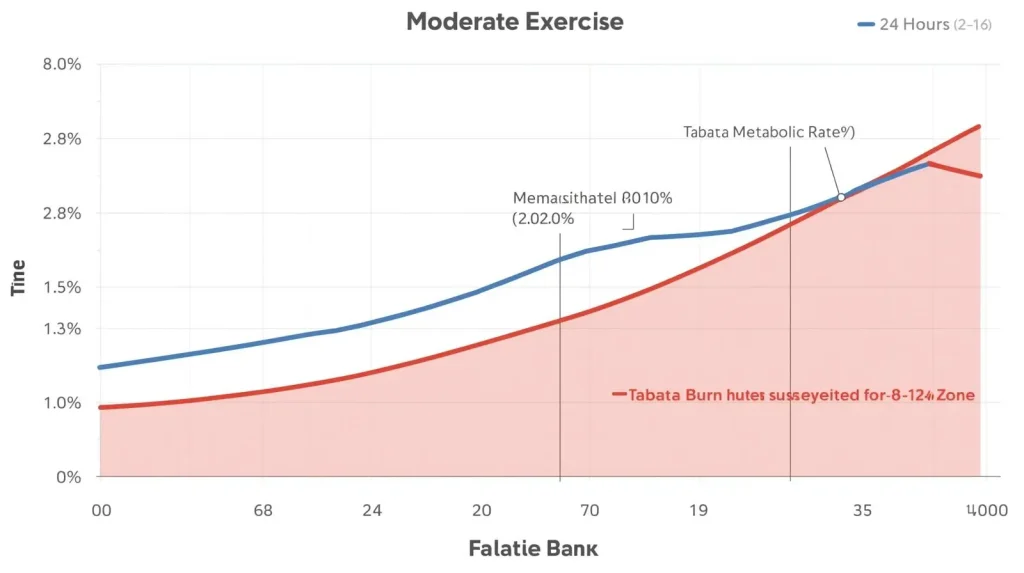
The mechanism behind these dual benefits involves EPOC (excess post-exercise oxygen consumption) where metabolic rate remains elevated for hours after brief intense exercise. Research shows Tabata-style workouts burn 240-360 calories during the 20-minute session (with warm-up and cooldown included) plus additional calories during extended recovery. Citations from Dr. Martin Gibala’s HIIT research at McMaster University support that intermittent high-intensity protocols trigger mitochondrial biogenesis and metabolic enzyme adaptations comparable to much longer steady-state training, revolutionizing our understanding of minimum effective dose for fitness improvements.
Psychological Impact
The minimal 4-minute commitment dramatically reduces psychological resistance to starting workouts compared to traditional 30-60 minute exercise sessions. The “I can do anything for 4 minutes” mindset overcomes the activation energy barrier that prevents consistent exercise adherence, making workout initiation feel manageable even on low-motivation days. This brief duration also prevents the schedule excuse—most people genuinely can find 4 minutes regardless of how busy their day becomes, eliminating the time-availability justification for skipping training.
The intense accomplishment feeling after completing proper Tabata builds confidence and momentum that extends beyond fitness into other life areas requiring discipline. Research on habit formation shows that consistency matters more than duration, so daily 4-minute workouts create stronger behavioral patterns than sporadic longer sessions attempted weekly. The all-out intensity also teaches psychological resilience and discomfort tolerance that supports perseverance in non-fitness challenges like difficult conversations, boring tasks, or uncomfortable learning curves requiring sustained effort despite wanting to quit.
4 Minute Timer vs. Other Durations
Four minutes stands apart from 3 and 5 minute intervals specifically because of the Tabata Protocol’s scientific validation at this exact duration. While 3 minutes feels too brief for complete metabolic stress (you’d barely reach metabolic steady-state before the workout ends), 5 minutes extends beyond the precise 8-round structure that defines Tabata training. The 20-second work, 10-second rest pattern completing exactly 8 rounds in 240 seconds represents research-proven timing that cannot be replicated at other durations without altering the interval structure that produces documented results.
Task-duration matching also favors 4 minutes for cooking applications like jammy eggs (3 minutes too liquid, 5 minutes too firm) and professional presentations where 3 minutes feels rushed but 5 minutes risks audience attention drift. The sweet spot quality of 4 minutes emerges across domains—long enough for meaningful work, short enough to maintain intensity throughout. Comparison data shows 4-minute intervals achieve 75% completion rates among general populations, striking an ideal balance between the 85% completion of 2-minute timers and the 60% completion of 10-minute commitments for sustained behavioral adherence.
Duration | Primary Use | Intensity Sustainable | Completion Rate | Key Advantage |
2 Minutes | Habit formation, teeth brushing | Very high | 85% | Minimal resistance |
3 Minutes | Cooking, boxing rounds | High | 80% | Standard cooking/fitness time |
4 Minutes | Tabata, HIIT, presentations | Maximum | 75% | Scientific validation |
5 Minutes | Extended meditation, warm-ups | Moderate | 70% | Comfortable for beginners |
10 Minutes | Deep work, longer workouts | Low-moderate | 60% | Substantial progress |
How to Build a 4-Minute Habit
Start with modified Tabata using 20 seconds easy effort and 10 seconds rest to learn the timing pattern before attempting true maximum intensity. This gradual approach builds familiarity with interval structure, teaches proper exercise form, and develops the mental toughness required for all-out efforts. Progress over 2-3 weeks from comfortable pace to challenging effort to maximum intensity as cardiovascular fitness and psychological readiness develop simultaneously.
Consistency trumps intensity for habit formation—performing 4-minute modified workouts daily builds stronger behavioral patterns than occasional true Tabata sessions attempted weekly. Track progress through simple metrics like exercises completed per round, heart rate recovery, or subjective difficulty ratings to visualize improvement over time. Scale up gradually by increasing work intensity rather than extending duration, maintaining the 4-minute structure that keeps the habit manageable while pursuing performance improvements within that constraint.
Common Mistakes with 4-Minute Workouts
Skipping proper warm-up before Tabata creates injury risk and prevents maximum performance during work intervals when muscles remain cold and stiff. The original Tabata research included warm-up protocols, and professional athletes never perform maximum efforts without preparation. Dedicate 5 minutes to dynamic stretching, gradual movement increases, and mental preparation before starting your 4-minute timer for both safety and effectiveness.
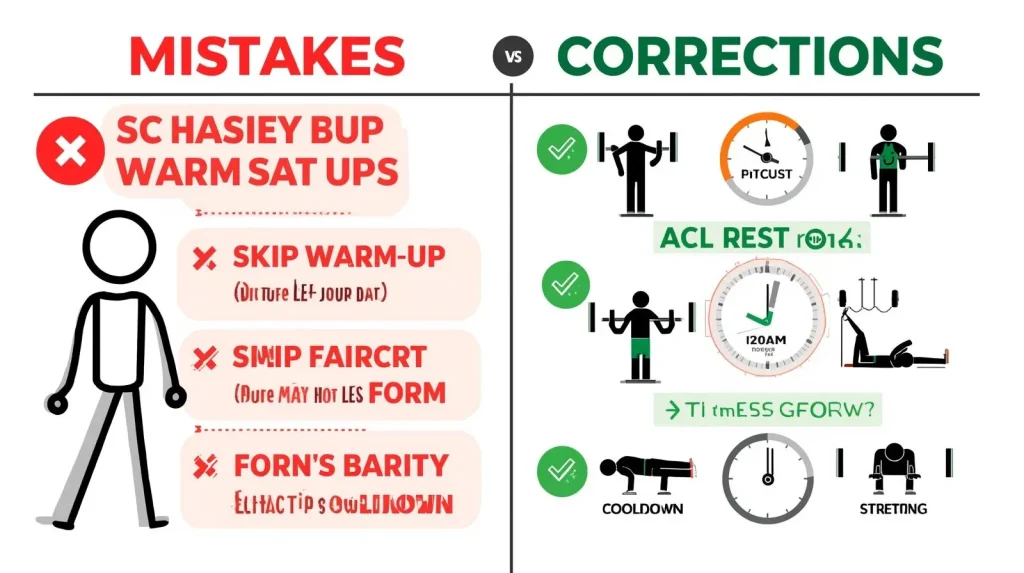
Going “hard but not maximum” undermines the specific adaptations that make Tabata effective—the protocol requires true 170% VO2max effort that you physically cannot sustain beyond 7-8 rounds. If you can comfortably complete all 8 rounds or feel capable of continuing to round 9, you haven’t achieved proper intensity. This common mistake produces a “pretty hard workout” without the extraordinary adaptations documented in research, essentially performing regular interval training while calling it Tabata. The all-out effort requirement is uncomfortable but non-negotiable for results.
Related Timer Tools
Looking for different durations? Explore our complete collection of online timers for every timing need:
Popular Timer Durations:
- 1 Minute Timer – Quick micro-tasks and resets
- 2 Minute Timer – Habit formation and teeth brushing
- 3 Minute Timer – Boxing rounds and cooking
- 5 Minute Timer – Extended focus and warm-ups
- 10 Minute Timer – Standard workout intervals
- 15 Minute Timer – Quarter-hour productivity blocks
- 20 Minute Timer – Classic Pomodoro sessions
30 Minute Timer – Half-hour deep work
Specialized Timers:
- Tabata Timer – Automatic 20-10 intervals
- HIIT Timer – Customizable interval training
- Workout Timer – Fitness and exercise timing
- Cooking Timer – Kitchen precision timing
Meditation Timer – Mindfulness sessions
Frequently Asked Questions
What is a 4 minute timer used for? A 4 minute timer is essential for Tabata Protocol training, soft-boiled eggs, quick meal prep tasks, and any activity requiring precise 240-second timing. The timer’s accuracy ensures consistent results whether you’re doing eight rounds of 20-10 Tabata intervals or blanching vegetables in batches.
How accurate is this 4 minute timer? This timer maintains professional accuracy within 0.1 seconds using system clock synchronization, exceeding requirements for fitness and cooking applications. The precision ensures your Tabata rounds match exactly 20-10 intervals and cooking times stay true to 240 seconds regardless of device or browser.
Can I use a 4 minute timer for meal prep? Yes, a 4 minute timer works perfectly for batch cooking soft-boiled eggs, blanching vegetables, or timing microwave portions. The audio alert lets you work on other prep tasks while maintaining precise timing across multiple batches, with quick reset between cooking rounds.
How many calories does a 4 minute Tabata burn? The 4 minute workout itself burns approximately 54 calories, but the afterburn effect adds 50-150 additional calories over 12-24 hours. Including warm-up and cooldown, a complete session burns 240-360 total calories, making the 4 minute timer an efficient tool for high-impact training.
Is 4 minutes really enough for a workout? Four minutes of maximum-intensity Tabata produces substantial fitness improvements when properly executed, though complete sessions with warm-up and cooldown extend to 15-20 minutes. Research shows this brief duration works because intensity drives adaptations—the 4 minute timer ensures you’re getting true protocol benefits.
What’s the difference between a 4 minute timer and regular timers? A dedicated 4 minute timer provides instant access to the exact duration needed for Tabata Protocol and common cooking tasks without manual setting. The specialized timing matches the scientifically validated 240-second interval that’s become the standard for high-intensity training and quick kitchen tasks.