When Is Chinese New Year 2026? | Date, Day & Countdown
Quick Answer: When Is Chinese New Year 2026?
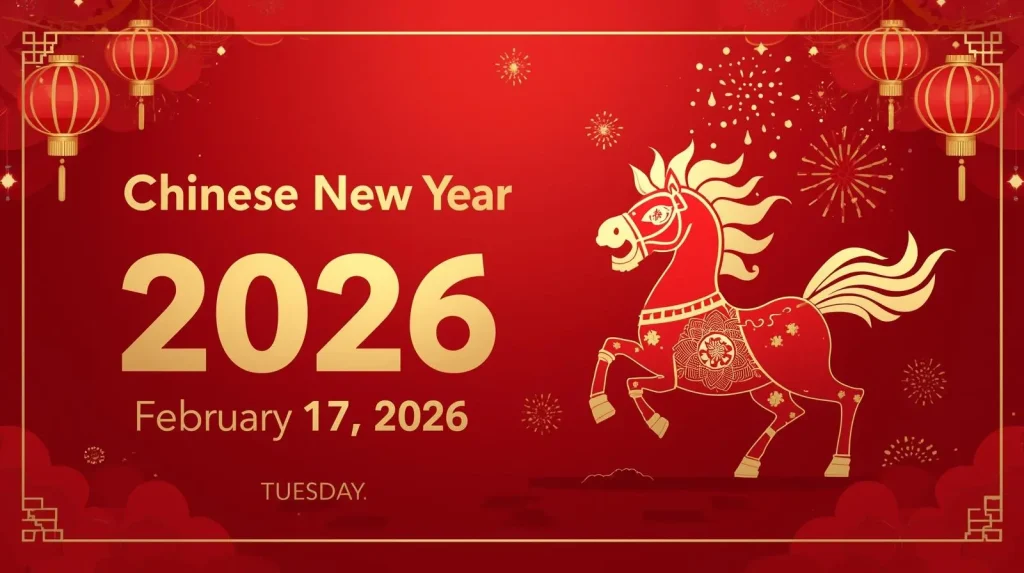
Chinese New Year 2026 falls on Tuesday, February 17, 2026. The celebrations begin on Chinese New Year’s Eve (February 16) and continue for 16 days until the Lantern Festival on March 3, 2026. This marks the beginning of the Year of the Fire Horse, a rare and powerful zodiac combination that appears only once every 60 years.
The Spring Festival is the most important traditional holiday in Chinese culture, celebrated by over 2 billion people worldwide. The date changes every year because it follows the lunar calendar, always falling on the second new moon after the winter solstice, between January 21 and February 20 on the Western calendar.
Chinese New Year 2026 Countdown
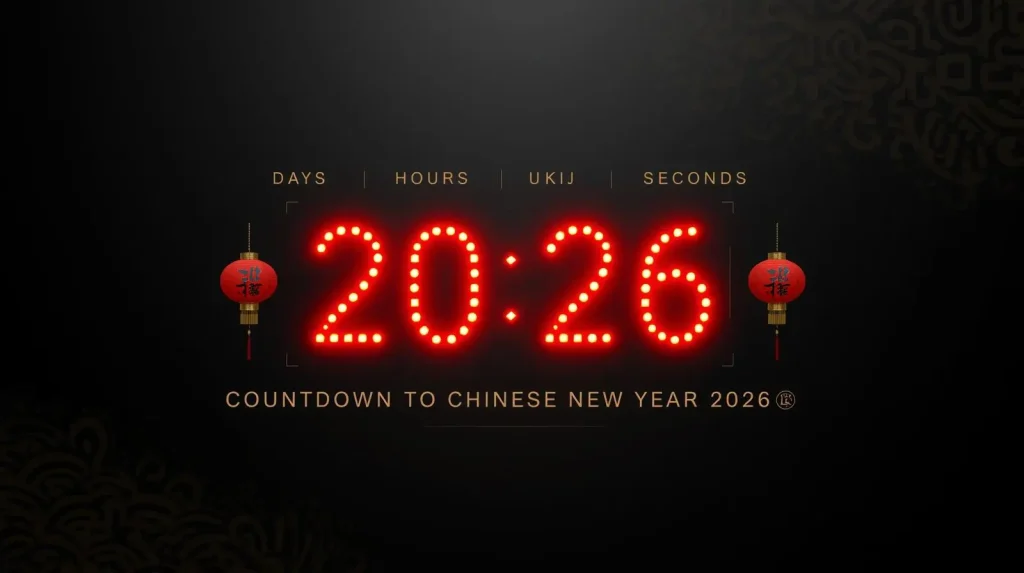
As of today, December 19, 2025, there are 60 days until Chinese New Year 2026. The countdown brings excitement for family reunions, festive celebrations, and fresh beginnings as millions prepare for the most anticipated holiday period of the year.
Chinese communities worldwide start preparations weeks in advance, cleaning homes thoroughly to sweep away bad luck, shopping for new clothes and decorations, and planning elaborate reunion dinners. The energy builds as the date approaches, with markets filling with red lanterns, spring couplets, and traditional foods that symbolize prosperity and good fortune.
Chinese New Year 2026 Key Dates at a Glance
Event | Date 2026 | Day |
|---|---|---|
Little Year (Kitchen God) | Feb 10-11 | Tue-Wed |
Chinese New Year’s Eve | Feb 16 | Monday |
Chinese New Year (Day 1) | Feb 17 | Tuesday |
Official Holiday Ends (China) | Feb 23 | Monday |
Lantern Festival | Mar 3 | Tuesday |
Year of Horse Ends | Feb 5, 2027 | Friday |
What Day Is Chinese New Year 2026?
Chinese New Year 2026 falls on a Tuesday, which is considered particularly auspicious in Chinese culture. Tuesday represents dynamic energy and forward movement, aligning perfectly with the active, ambitious spirit of the Fire Horse year. This weekday placement means many countries will extend the holiday period to create long weekends for maximum celebration time.
The Tuesday start allows families to gather over the weekend before New Year’s Eve (Monday, February 16) and enjoy extended time together. Many businesses worldwide close for the entire week, while others remain closed until early March, creating what’s known as the world’s largest annual human migration as hundreds of millions travel home.
Chinese New Year Dates: Past, Present & Future
Understanding the pattern of Chinese New Year helps with planning celebrations, travel, and business operations. Here’s a comprehensive look at recent and upcoming dates:
Year | Date | Day | Zodiac Animal | Element |
|---|---|---|---|---|
2024 | February 10 | Saturday | Dragon | Wood |
2025 | January 29 | Wednesday | Snake | Wood |
2026 | February 17 | Tuesday | Horse | Fire |
2027 | February 6 | Saturday | Goat | Fire |
2028 | January 26 | Wednesday | Monkey | Earth |
2029 | February 13 | Tuesday | Rooster | Earth |
2030 | February 3 | Sunday | Dog | Metal |
The date fluctuates because the Chinese calendar is lunisolar, meaning it tracks both the moon’s phases and the sun’s position. Each new year begins on the second new moon after the winter solstice, creating the 30-day variation window. This ancient calendar system has guided Chinese culture for over 4,000 years and continues to determine important festivals and agricultural activities.
Year of the Fire Horse 2026: Zodiac Meaning & Significance
2026 is the Year of the Fire Horse (Bing Wu 丙午), a powerful and rare zodiac combination that last occurred in 1966 and won’t return again until 2086. The Horse is the seventh animal in the 12-year Chinese zodiac cycle, symbolizing freedom, energy, independence, and unstoppable momentum. When combined with the Fire element, these qualities intensify dramatically.
People born in Horse years (2026, 2014, 2002, 1990, 1978, 1966, 1954) are known for their charismatic personalities, adventurous spirits, and natural leadership abilities. The Fire element adds creativity, passion, impulsiveness, and bold decision-making. This combination creates individuals who are confident, energetic, and driven to succeed, though they may struggle with patience and need to guard against recklessness. The Fire Horse year promises excitement, rapid change, innovation in business and technology, and abundant opportunities for those willing to take calculated risks.
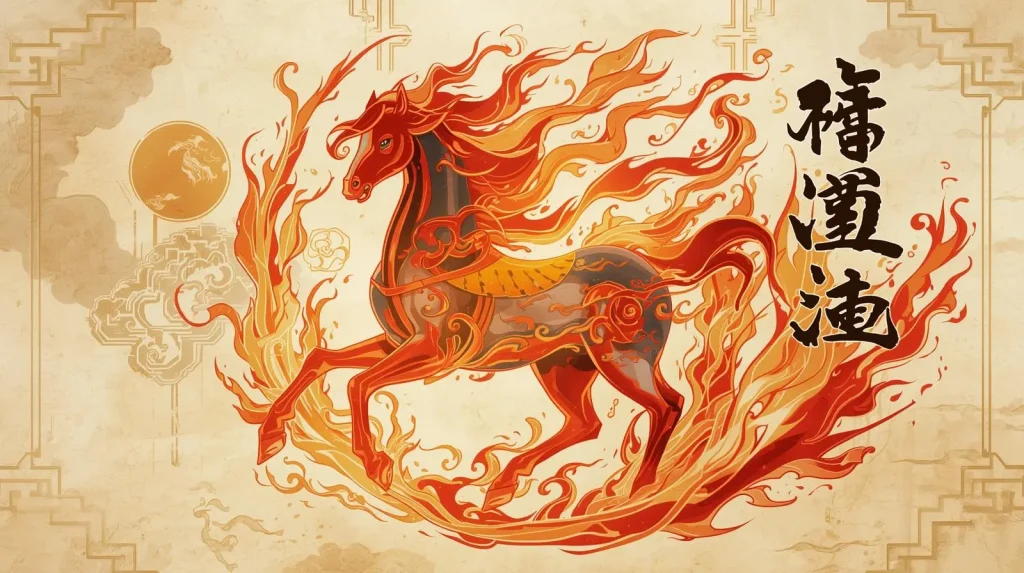
Fire Horse Personality Traits & Characteristics
The Fire Horse combines the Horse’s natural attributes with Fire’s transformative energy, creating a unique personality profile. Independent and freedom-loving, Fire Horses resist restrictions and chart their own paths in life. They possess natural charisma that draws others to them, making them excellent leaders and motivators. Their passionate nature means they pursue goals with intense focus and enthusiasm.
Creative and innovative thinking allows Fire Horses to solve problems in unexpected ways and pioneer new approaches. They demonstrate courage and boldness, rarely backing down from challenges or intimidation. However, the Fire Horse energy can manifest as impatience and restlessness, leading to hasty decisions or difficulty completing long-term projects. They may also experience emotional intensity, with feelings that burn bright but sometimes too hot. The key for Fire Horses is channeling their tremendous energy productively while developing patience and strategic thinking to complement their natural dynamism.
Which Years Are Horse Years?
If you or someone you know was born in a Horse year, 2026 is your benmingnian (本命年) or zodiac year. Chinese tradition views this as a year requiring extra caution and protection, as your zodiac year is believed to bring both great opportunity and potential challenges.
If you or someone you know was born in a Horse year, 2026 is your benmingnian (本命年) or zodiac year. Chinese tradition views this as a year requiring extra caution and protection, as your zodiac year is believed to bring both great opportunity and potential challenges.
- 2026 – Fire Horse (Bing Wu)
- 2014 – Wood Horse (Jia Wu)
- 2002 – Water Horse (Ren Wu)
- 1990 – Metal Horse (Geng Wu)
- 1978 – Earth Horse (Wu Wu)
- 1966 – Fire Horse (Bing Wu)
- 1954 – Wood Horse (Jia Wu)
- 1942 – Water Horse (Ren Wu)
During your benmingnian, Chinese tradition recommends wearing red clothing or accessories (red underwear, red bracelets, red socks) throughout the year for protection and good luck. The color red is believed to ward off misfortune and negative energy. Many people also visit temples to pray for blessings and carry jade amulets for additional protection during this pivotal year.
Famous Fire Horse Personalities (Born 1966)
The last Fire Horse year in 1966 produced remarkably successful individuals across various fields, demonstrating the zodiac combination’s powerful influence:
- Cindy Crawford (supermodel, businesswoman)
- Halle Berry (Oscar-winning actress)
- Janet Jackson (music icon)
- Salma Hayek (actress, producer)
- Kiefer Sutherland (actor)
- Mike Tyson (boxing champion)
- Christoph Waltz (actor, multiple Oscars)
- Adam Sandler (comedian, producer)
- Matthew Broderick (actor, director)
These individuals exemplify Fire Horse characteristics: charisma, creative genius, determination to succeed, and the courage to take bold career risks. Their achievements validate the Chinese belief that Fire Horse years produce exceptionally dynamic and influential personalities.
Chinese New Year 2026 Holiday Dates by Country
Chinese New Year celebrations extend far beyond mainland China, with official public holidays declared across Asia-Pacific and recognized in communities worldwide. Here are the official government-declared holiday dates for 2026:
Country/Region | Holiday Dates | Total Days | Notes |
|---|---|---|---|
Mainland China | Feb 15-23, 2026 | 9 days | Includes weekend adjustments |
Hong Kong | Feb 17-19, 2026 | 3 days | Day 1, 2, and 3 |
Taiwan | Feb 16-20, 2026 | 5 days | Eve through Day 4 |
Singapore | Feb 17-18, 2026 | 2 days | Day 1 and 2 |
Malaysia | Feb 17-18, 2026 | 2 day | Varies by state* |
Indonesia | Feb 17, 2026 | 1 day | National holiday |
Philippines | Feb 17, 2026 | 1 day | Special non-working day |
Brunei | Feb 17, 2026 | 1 days | Public holiday |
Vietnam (Tết) | Feb 15-21, 2026 | 7 days | Similar lunar calendar |
South Korea (Seollal) | Feb 16-18, 2026 | 3 days | Korean Lunar New Year |
*In Malaysia, Kedah and Terengganu may observe different dates based on state holidays.
Many businesses, schools, and government offices close for extended periods beyond official dates. Employees often take additional vacation days to create 2-3 week breaks, particularly in mainland China where this represents the year’s most important family reunion opportunity.
Mainland China Official Holiday Schedule 2026
The State Council of China announced the official 2026 holiday schedule on November 4, 2025. Chinese New Year represents the longest holiday period of the year:
Spring Festival Holiday: February 15-23, 2026 (9 days total)
- Saturday, February 14 – Regular workday (compensatory work for Feb 20)
- Sunday-Monday, February 15-16 – Holiday begins (New Year’s Eve on Feb 16)
- Tuesday, February 17 – Chinese New Year Day 1 (official start)
- Wednesday-Sunday, February 18-22 – Continued celebration
- Monday, February 23 – Final holiday day
- Tuesday, February 24 – Return to work
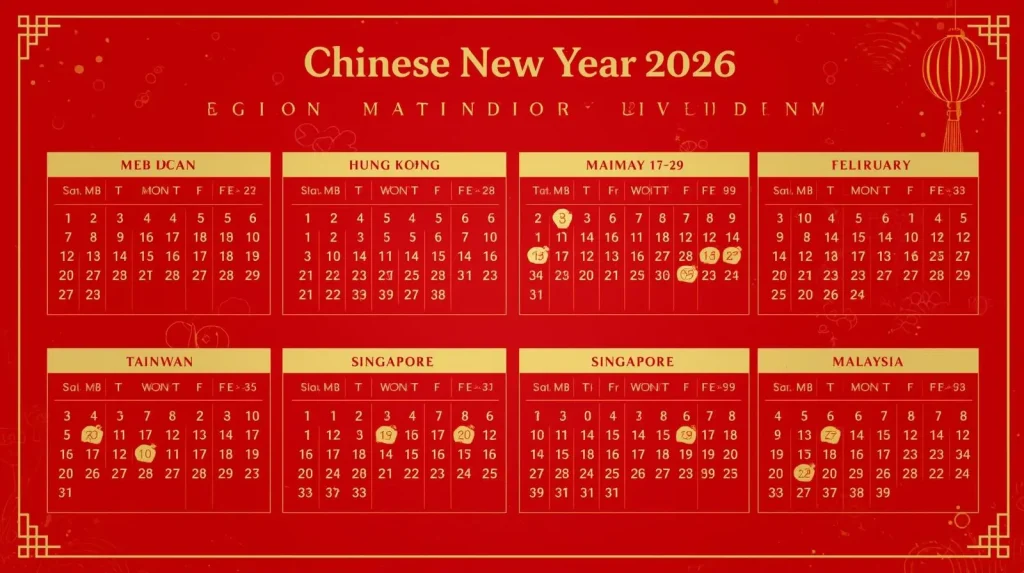
The government strategically arranges workdays to create extended holiday periods, requiring employees to work certain Saturdays or Sundays before or after the main holiday. This system, called “tiaoxiu” (调休), allows for maximum consecutive days off while managing business continuity.
Chinese New Year Traditions & Celebrations
Chinese New Year encompasses rich traditions passed down through generations, each carrying deep symbolic meaning. These customs unite families, honor ancestors, and invite prosperity for the coming year. Understanding these traditions helps appreciate the festival’s cultural significance beyond the festive atmosphere.
Pre-New Year Preparations
House Cleaning (扫尘 Sǎo Chén) – The sweeping of dust occurs one to two weeks before New Year’s Day. Families thoroughly clean every corner of their homes to sweep away bad luck and misfortune from the old year, making space for incoming good fortune. Windows are washed, curtains cleaned, and floors scrubbed until sparkling. However, all cleaning must finish before New Year’s Eve, as cleaning during the festival itself might sweep away newly arrived good luck.
Shopping for New Clothes (买新衣 Mǎi Xīn Yī) – Everyone purchases at least one new outfit, preferably in red or bright colors, to wear on New Year’s Day. New clothes symbolize a fresh start and new beginnings. Children especially look forward to their new festive outfits, which they keep pristine until the big day arrives.Little Year (小年 Xiǎo Nián) – Celebrated on February 10-11, 2026 (varies by region), Little Year marks the Kitchen God’s journey to heaven. Families offer sweet foods like candy and honey to the Kitchen God, hoping he’ll report favorably about the household to the Jade Emperor. This tradition starts the countdown to Spring Festival with increased preparation intensity.
New Year’s Eve (除夕 Chú Xī) – February 16, 2026
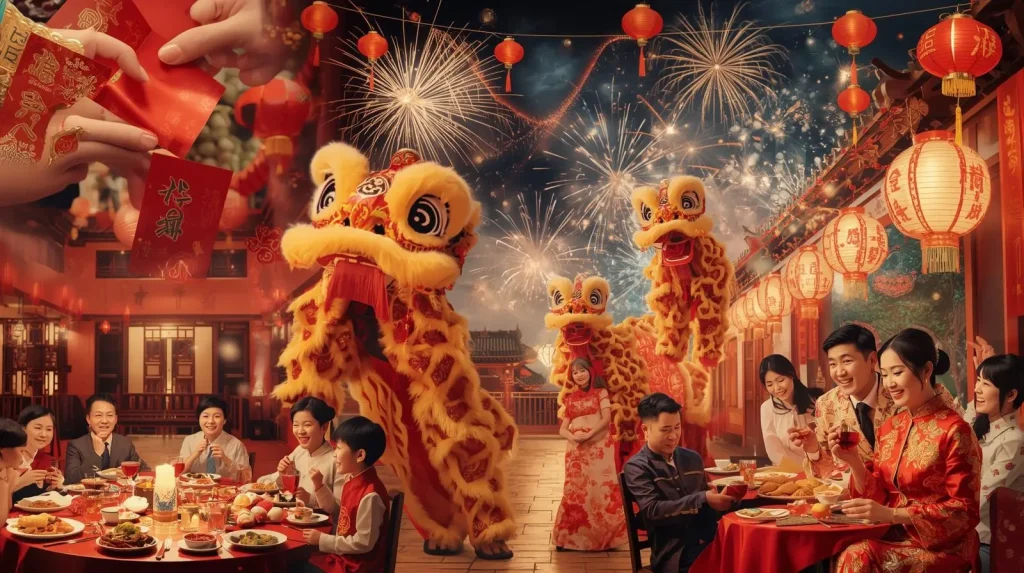
Reunion Dinner (年夜饭 Nián Yè Fàn) – The most important meal of the year brings together entire families, often with members traveling thousands of miles to attend. The feast features symbolic dishes: whole fish (余 yú, meaning surplus), dumplings shaped like ancient gold ingots (wealth), spring rolls (gold bars), rice cakes (年糕 nián gāo, higher year), and long noodles (longevity). Families deliberately cook extra food, leaving leftovers to symbolize abundance carrying into the new year.
Red Envelope Preparation (准备红包 Zhǔn Bèi Hóng Bāo) – Adults prepare red envelopes containing crisp new bills to give children and unmarried young adults. The money amount typically includes lucky numbers like 8 (prosperity) while avoiding 4 (sounds like death). Married couples give to single people, and the younger generation never gives to elders.
Staying Up Late (守岁 Shǒu Suì) – Families stay awake through midnight, believing that staying up helps parents live longer. Everyone gathers around the television watching the Spring Festival Gala, playing card games, eating snacks, and enjoying quality time together. At exactly midnight, the sky explodes with fireworks and firecrackers as every household welcomes the new year simultaneously.
Chinese New Year’s Day – February 17, 2026
First Day Customs – The day begins with children greeting elders with traditional New Year blessings (拜年 bài nián): “Gong Xi Fa Cai” (Congratulations and prosperity) or “Xin Nian Kuai Le” (Happy New Year). In return, elders distribute red envelopes to younger family members. Everyone wears their new clothes, and the house remains unswept to preserve the good luck that arrived at midnight.
Temple Visits (上香 Shàng Xiāng) – Many families visit Buddhist or Taoist temples to burn incense, make offerings, and pray for blessings in the new year. Temples overflow with worshippers, especially on the first day, creating an atmosphere of shared hope and spiritual devotion.Lion and Dragon Dances (舞狮舞龙 Wǔ Shī Wǔ Lóng) – These spectacular performances ward off evil spirits and bring good luck. Trained dancers manipulate elaborate lion or dragon costumes through streets, performing acrobatic routines. Businesses hang lettuce from doorways with red envelopes attached; the lion “eats” these offerings, symbolizing the business consuming good fortune.
Days 2-15: Extended Celebrations
Day 2 (February 18) – Married daughters visit their birth families, bringing gifts for parents. This tradition, called “returning to her mother’s home” (回娘家 huí niáng jiā), strengthens family bonds.
Day 5 (February 21) – Known as “Po Wu” (破五), this day marks when many taboos lift and businesses reopen. Families eat dumplings and welcome the God of Wealth (财神 cái shén).
Day 7 (February 23) – Everyone’s birthday according to tradition. This day celebrates humanity’s creation and is called “Renri” (人日, everyone’s birthday).
Day 15 (March 3, 2026) – The Lantern Festival (元宵节 Yuán Xiāo Jié) concludes Chinese New Year celebrations. Families admire decorative lantern displays, eat sweet rice balls (汤圆 tāng yuán) symbolizing family unity, solve lantern riddles, and watch final fireworks displays. This beautiful finale brings the 16-day celebration to a close.
Lucky Foods for Chinese New Year 2026
Food plays a central role in Chinese New Year, with specific dishes chosen for their symbolic meanings and auspicious homonyms. Each traditional food carries wishes for different types of good fortune in the coming year.
Essential Lucky Foods & Their Meanings
Fish (鱼 Yú) – The most important dish, always served whole (head and tail attached). The Chinese word for fish sounds identical to “surplus,” so eating fish symbolizes abundance and wealth remaining after meeting all needs. Families traditionally leave some fish uneaten to ensure surplus carries into the new year.
Dumplings (饺子 Jiǎo Zi) – Shaped like ancient Chinese gold ingots, dumplings represent wealth and prosperity. Northern Chinese families make hundreds of dumplings together on New Year’s Eve, sometimes hiding coins inside for extra luck. The more dumplings you eat, the more money you’ll make in the coming year.
Spring Rolls (春卷 Chūn Juǎn) – These golden, crispy rolls symbolize gold bars and wealth. They’re especially popular in southern China and represent the spring season’s arrival.
Tangyuan (汤圆 Tāng Yuán) – Sweet rice balls served in syrup during the Lantern Festival symbolize family unity and togetherness. The round shape represents completeness and reunion.
Nian Gao (年糕 Nián Gāo) – Sticky rice cake whose name sounds like “higher year,” symbolizing rising prosperity and children growing taller. Each year should be better than the last.
Long Noodles (长寿面 Cháng Shòu Miàn) – Longevity noodles must never be cut or broken before eating, as they represent long life. The longer the noodle, the longer your life will be.
Mandarin Oranges (橘子 Jú Zi) – The word sounds like “luck” or “gold,” making oranges essential gifts and decorations. Families display bowls of oranges and give them to visitors.
Peanuts (花生 Huā Shēng) – The name means “birth of flowers and growth,” symbolizing longevity, fertility, and continuous prosperity.
Chicken (鸡 Jī) – Served whole to symbolize family unity and completeness. Chicken also sounds like “lucky” in some dialects.
Lettuce (生菜 Shēng Cài) – In Cantonese, this sounds like “rising fortune,” making it popular in lion dances and household displays.
Chinese New Year Decorations & Symbolism
Red Color Dominance – Red appears everywhere during Chinese New Year as it symbolizes happiness, success, and good fortune while warding off evil spirits. According to legend, the mythical monster Nian feared the color red and loud noises, so people hung red decorations and lit firecrackers to protect themselves.
Spring Couplets (春联 Chūn Lián) – Red paper banners with poetic verses written in black ink hang on doorframes. These couplets express wishes for prosperity, health, and happiness. Common phrases include “五福临门” (Five Blessings Arrive at the Door) and “吉祥如意” (Good Fortune as You Wish).
Fu Character (福 Fú) – This character meaning “fortune” or “luck” adorns doors and walls. Many hang it upside down because “upside down” (倒 dào) sounds like “arrive” (到 dào), so an upside-down fu means “fortune arrives.”
Paper Cuttings (剪纸 Jiǎn Zhǐ) – Intricate red paper designs featuring zodiac animals, flowers, and lucky characters decorate windows and walls. Each design carries specific symbolic meanings.
Lanterns (灯笼 Dēng Lóng) – Red lanterns hang from doorways, trees, and streets, creating a festive glow. During the Lantern Festival, elaborate designs light up entire cities.
Kumquat Trees (金桔树 Jīn Jú Shù) – Small potted trees with golden fruits represent wealth and prosperity. The gold color and round shape symbolize coins and completeness.
Pussy Willow Branches (银柳 Yín Liǔ) – These silver-colored branches sound like “money flowing in” in Cantonese, making them popular in southern China.
Firecracker Strings (鞭炮 Biān Pào) – Long strings of red firecrackers hang outside homes. Setting them off at midnight drives away evil spirits and welcomes good luck with tremendous noise.
The 18 Chinese New Year Taboos You Must Avoid
Chinese culture places great importance on starting the new year correctly, believing that actions during the festival period influence your luck for the entire year ahead. These taboos are taken seriously by traditional families, though younger generations may observe them more flexibly.
S.No. | Taboo | Why to Avoid | Alternative Action |
01 | No cleaning or sweeping on Day 1 | Sweeps away good luck that just arrived | Complete all cleaning before New Year’s Eve |
02 | Don’t take out trash during first 5 days | Throws away wealth and prosperity | Wait until Day 6 to resume normal waste disposal |
03 | No washing hair on Day 1 | Washes away good fortune | Wash hair on New Year’s Eve instead |
04 | Avoid sharp objects (scissors, knives) on Day 1 | Cuts off wealth and good luck streams | Prepare all food beforehand |
05 | Don’t break dishes or ceramics | Symbolizes broken relationships and bad fortune | If broken, say “碎碎平安” (peace year after year) immediately |
06 | No crying or fighting | Sets negative emotional tone for entire year | Resolve conflicts before New Year arrives |
07 | Don’t wear black or white | These are funeral colors associated with death | Wear red, gold, yellow, or other bright colors |
08 | Avoid unlucky words (death, sick, empty, break) | Speaking negativity attracts misfortune | Use only positive, auspicious language |
09 | Never give clocks as gifts | “Giving a clock” sounds like “attending a funeral” | Give oranges, red envelopes, or food gifts instead |
10 | No medicine taking on Day 1 | Suggests illness throughout the year | Take necessary medicine before midnight if possible |
11 | Don’t borrow or lend money | Starts a year of debt and financial stress | Settle all debts before New Year |
12 | Avoid hospital visits | Brings sickness energy into new year | Visit sick relatives before the holiday |
13 | Don’t kill animals | Creates bad karma and negative energy | Prepare meat dishes in advance |
14 | No sewing or needlework | Pierces your good fortune | Complete all mending beforehand |
15 | Don’t wake people roughly | Forces them to rush all year | Let everyone wake naturally |
16 | Avoid damaged clothing | Represents poverty and hardship | Wear only new or excellent-condition clothes |
17 | No spending money on Day 1 | Money flowing out means poverty coming | Carry coins but avoid purchases |
18 | Don’t visit newly bereaved families | Brings death energy to your household | Send condolences after the holiday period |
These taboos aren’t superstitious nonsense to many Chinese families—they represent generations of cultural wisdom about maintaining positive energy and harmonious relationships. Even non-believers often observe major taboos out of respect for tradition and older family members.
UNESCO Intangible Cultural Heritage Recognition
On December 4, 2024, Chinese New Year celebrations received formal recognition as UNESCO Intangible Cultural Heritage of Humanity during the 19th session of the Intergovernmental Committee in Asunción, Paraguay. This historic designation acknowledges the festival’s profound cultural significance, its role in strengthening family bonds, and its contribution to global cultural diversity.
The UNESCO inscription recognizes not just the festival itself but the entire ecosystem of traditions, crafts, and knowledge systems surrounding Chinese New Year. This includes paper-cutting arts, traditional costume-making, culinary heritage, folk music and dance, mythology and storytelling, and the lunar calendar system itself. The designation validates what Chinese communities worldwide have known for millennia: this festival represents humanity’s oldest continuous cultural celebration, spanning over 4,000 years of unbroken tradition.
UNESCO’s recognition brings international attention to preserving traditional practices that face pressure from modernization. It encourages younger generations to learn and maintain ancestral customs while adapting them to contemporary life. The inscription also promotes intercultural dialogue, as Chinese New Year celebrations increasingly welcome participation from diverse cultural backgrounds in multicultural societies worldwide.
Chinese New Year’s Global Celebration
Chinese New Year has evolved from a regional Chinese festival into a truly global celebration recognized across continents. Wherever Chinese diaspora communities have settled, they’ve maintained this vital connection to cultural heritage, and increasingly, diverse populations join the festivities.
Major International Celebrations
Southeast Asia – Chinese New Year ranks as an official public holiday in Singapore, Malaysia, Indonesia, Brunei, and the Philippines. These countries feature spectacular street celebrations, with Singapore’s Chinatown hosting elaborate light displays and cultural performances. Malaysia’s open house tradition invites friends of all backgrounds to join family celebrations, while Bangkok’s Chinatown (Yaowarat) closes streets for massive festivities.
North America – San Francisco hosts North America’s oldest and largest Chinese New Year parade, attracting millions of spectators annually. New York City’s Chinatown explodes with firecrackers (where permitted) and cultural displays. Vancouver, Toronto, Los Angeles, and Chicago stage major celebrations featuring lion dances, food festivals, and cultural exhibitions. Many American schools now teach students about the festival, incorporating it into multicultural education.
Europe – London’s Trafalgar Square transforms into Asia’s biggest celebration outside Asia, with 700,000+ attendees. Paris’s 13th arrondissement features vibrant dragon dances through streets. Manchester, Amsterdam, and Milan host significant celebrations as Chinese communities and curious locals gather to welcome the Lunar New Year together.
Australia & New Zealand – Sydney’s Chinatown becomes Australia’s celebration epicenter, while Melbourne’s Spring Festival features traditional and contemporary performances. Auckland welcomes Chinese New Year with lantern festivals and fireworks displays across the city.
Latin America – Peru’s large Chinese-descended population (Tusán community) celebrates with unique fusion traditions. Argentina, Brazil, and Mexico’s Chinatowns host festivities blending Latin and Chinese cultural elements.
This global spread demonstrates how cultural traditions transcend borders, creating bridges between communities and enriching multicultural societies worldwide.
Business Impact of Chinese New Year 2026
Chinese New Year creates the world’s most significant annual disruption to global manufacturing and supply chains. Understanding this impact is crucial for international businesses, importers, retailers, and logistics companies working with Chinese suppliers or partners.
Manufacturing Shutdown Timeline
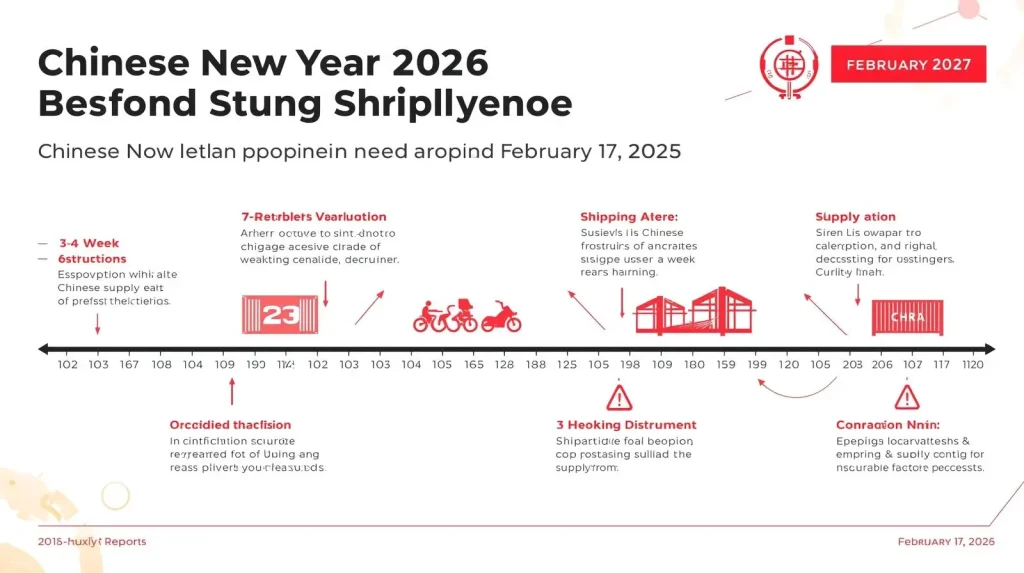
The official 9-day holiday represents only a fraction of actual business closures. Here’s the realistic timeline for 2026:
Phase 1: Slowdown (February 10-16) – Production begins decreasing 1-2 weeks before the official holiday as workers leave early to secure transportation home. Many factories operate at 50-70% capacity, with some departments closing entirely. New orders typically aren’t accepted, and quality control may suffer as experienced workers depart.
Phase 2: Complete Shutdown (February 17-23) – Virtually all manufacturing facilities close completely during the official holiday week. Ports operate at minimal capacity, freight forwarders close offices, and communication becomes impossible. This represents true dead time in China’s industrial economy.
Phase 3: Gradual Return (February 24-March 9) – Factories theoretically reopen, but actual production remains severely limited. Workers return gradually over 2-3 weeks, with some never returning (they’ve changed jobs or relocated). Training new employees, restocking materials, and equipment maintenance create delays even after reopening.Total Impact: Expect 3-4 weeks minimum of production disruption, from early February through early March 2026.
Business Impact of Chinese New Year 2026
Chinese New Year creates the world’s most significant annual disruption to global manufacturing and supply chains. Understanding this impact is crucial for international businesses, importers, retailers, and logistics companies working with Chinese suppliers or partners.
Manufacturing Shutdown Timeline
The official 9-day holiday represents only a fraction of actual business closures. Here’s the realistic timeline for 2026:
Phase 1: Slowdown (February 10-16) – Production begins decreasing 1-2 weeks before the official holiday as workers leave early to secure transportation home. Many factories operate at 50-70% capacity, with some departments closing entirely. New orders typically aren’t accepted, and quality control may suffer as experienced workers depart.
Phase 2: Complete Shutdown (February 17-23) – Virtually all manufacturing facilities close completely during the official holiday week. Ports operate at minimal capacity, freight forwarders close offices, and communication becomes impossible. This represents true dead time in China’s industrial economy.
Phase 3: Gradual Return (February 24-March 9) – Factories theoretically reopen, but actual production remains severely limited. Workers return gradually over 2-3 weeks, with some never returning (they’ve changed jobs or relocated). Training new employees, restocking materials, and equipment maintenance create delays even after reopening.Total Impact: Expect 3-4 weeks minimum of production disruption, from early February through early March 2026.
Supply Chain Effects
Container Shortages – Shipping containers accumulate in wrong locations as cargo movement pauses. Post-holiday demand creates severe container shortages, particularly for China-to-North America and China-to-Europe routes.
Freight Rate Spikes – Ocean freight rates typically increase 20-40% during the pre-holiday rush as everyone scrambles to ship goods before the closure. Rates remain elevated for weeks after as backlogs clear.
Port Congestion – Chinese ports experience massive congestion both before (everyone shipping early) and after (all delayed cargo moving simultaneously) the holiday. Expect vessel delays of 5-10 days or more.
Air Freight Constraints – Air cargo capacity becomes extremely limited and expensive as businesses pay premiums to circumvent ocean shipping delays.
Raw Material Costs – Temporary shortages of components and materials drive price increases as factories restart and compete for limited supplies.
Strategic Business Planning for CNY 2026
Smart importers take these actions:
- Order Early – Place orders for March-April delivery by early December 2025 at the latest. Factor in normal production time PLUS the 4-week holiday disruption.
- Increase Inventory – Build safety stock levels 30-50% higher than normal to cover the extended shutdown period and potential post-holiday delays.
- Communicate Early – Confirm production schedules and shipping deadlines with suppliers by January 2026. Get written commitments on pre-holiday shipment dates.
- Diversify Suppliers – Consider sourcing from Vietnam, Thailand, or other Asian countries whose holidays don’t coincide exactly with Chinese New Year, reducing total disruption.
- Adjust Payment Terms – Negotiate payment schedules that account for holiday delays. Avoid payment deadlines falling during the closure period.
- Plan Logistics Alternatives – Arrange air freight backup options for critical shipments. Book ocean freight space months in advance, as capacity sells out.
- Budget for Increases – Allocate 15-25% additional budget for freight costs during January-March 2026 period.
2026 Business Environment Updates
New Regulations Effective 2026:
Customs Export Reforms (October 1, 2025) – New regulations require exporters to disclose the actual producing and selling entity, restricting third-party export declarations. This anti-document-trading measure aims to improve supply chain transparency but adds compliance requirements for foreign buyers.
Food Safety Law Revisions (December 1, 2025) – Updated regulations implement broader supervision over food transport and registration requirements for imported ingredients. Companies importing food products from China face additional documentation and inspection procedures.
GB Standards for Food-Contact Materials (September 2026) – New national standards for food-contact coatings and multilayer packaging require compliance verification. Importers of food packaging must ensure suppliers meet updated specifications.
Export Control Tightening – The Ministry of Commerce has broadened dual-use and high-tech control lists, requiring transaction-based licensing. Technology imports and exports face increased scrutiny due to trade tensions with the US and EU.
Civil Aeronautics Opening (July 2024 onwards) – China has opened its civil aeronautics sector to foreign investment, creating new opportunities for aviation-related businesses.Visa Exemption Expansion – China now offers visa-free entry to citizens of 50+ countries for stays up to 15-30 days, dramatically improving business travel convenience. This policy change reverses COVID-era restrictions and encourages international business engagement.
The World’s Largest Human Migration
Chinese New Year triggers “Chunyun” (春运, Spring Migration), the world’s largest annual human movement. In 2026, estimates predict over 800 million individual trips during the 40-day travel period surrounding the festival.
Why This Matters:
- China’s migrant workforce (农民工 nóng mín gōng) comprises 290+ million people who work in coastal cities but maintain families in interior provinces
- Many workers see parents and children only once annually during this holiday
- High-speed rail, flights, buses, and even motorcycles become overwhelmed with travelers
- Some workers travel 1,000+ miles each way, spending days in transit
Business Implications:
- Employees often extend holidays by taking additional vacation days
- Not all workers return—some change employers, reducing post-holiday staffing
- Hiring new employees during January-February becomes extremely difficult
- Recruitment should ideally wait until April-May when workforce stabilizes
Companies managing Chinese operations should account for reduced productivity from early February through mid-March when planning quarterly targets and project timelines.
Frequently Asked Questions About Chinese New Year 2026
When exactly does Chinese New Year 2026 start?
Chinese New Year 2026 officially begins at midnight on Tuesday, February 17, 2026. However, celebrations traditionally start on New Year’s Eve (Monday, February 16) with family reunion dinners and staying up through midnight to welcome the new year together.
Why does Chinese New Year change dates every year?
Chinese New Year follows the lunisolar calendar, which tracks both moon phases and the sun’s position. The festival always falls on the second new moon after the winter solstice, creating a 30-day variation window between January 21 and February 20 on the Western calendar. This ancient system has governed Chinese festivals and agriculture for over 4,000 years.
How long do Chinese New Year celebrations last?
The festival spans 16 days from New Year’s Eve (February 16) through the Lantern Festival (March 3, 2026). However, official public holidays vary by country—mainland China observes 9 days (February 15-23), while Hong Kong celebrates 3 days and Singapore 2 days. Many businesses remain closed or operate at reduced capacity for 2-3 weeks.
What animal is 2026 in the Chinese zodiac?
2026 is the Year of the Fire Horse (Bing Wu 丙午). This powerful combination of the Horse zodiac animal with the Fire element appears only once every 60 years. The last Fire Horse year was 1966, and the next won’t occur until 2086. People born in Horse years (2026, 2014, 2002, 1990, 1978, 1966) are known for their independence, energy, and charismatic personalities.
What should I avoid doing during Chinese New Year?
The most important taboos include: no cleaning or sweeping on the first day (sweeps away luck), don’t take out trash during the first five days (throws away wealth), avoid wearing black or white (funeral colors), never give clocks as gifts (sounds like attending a funeral), don’t break dishes (bad fortune), and avoid saying unlucky words like “death” or “sick.” Use only positive language and wear bright colors, especially red.
What are lucky foods to eat during Chinese New Year?
Essential lucky foods include: whole fish (symbolizes surplus and abundance), dumplings (shaped like gold ingots for wealth), long noodles (represent longevity—never cut them), tangyuan sweet rice balls (family unity), nian gao sticky rice cake (rising prosperity), spring rolls (gold bars), and mandarin oranges (the word sounds like “gold” or “luck”). Each dish carries specific symbolic meanings for the coming year.
Can non-Chinese people celebrate Chinese New Year?
Absolutely! Chinese New Year celebrations increasingly welcome people of all backgrounds, especially in multicultural societies. Attending public celebrations, learning about traditions, giving red envelopes, eating festive foods, and greeting others with “Gong Xi Fa Cai” (Happy New Year) are all appreciated ways to participate. Many Chinese families welcome curious friends to experience their celebrations, viewing it as cultural exchange and friendship.
How does Chinese New Year affect international shipping?
Chinese New Year creates massive supply chain disruptions. Manufacturing facilities close 1-2 weeks before the official holiday and don’t fully reopen until 1-2 weeks after, causing 3-4 weeks of production delays. Container shortages, freight rate increases (20-40% higher), port congestion, and longer shipping times affect global trade. Businesses should order 3-4 months ahead for post-holiday delivery and build extra inventory to cover the disruption period.
What’s the significance of red envelopes (hongbao)?
Red envelopes containing money (红包 hóng bāo) represent blessings, good luck, and warding off evil spirits. Married adults give them to children and unmarried young people during the festival. The envelope’s red color protects the recipient, while the money inside represents wishes for prosperity. Amounts typically include lucky numbers (particularly 8) and avoid 4, which sounds like “death” in Chinese. Digital red envelopes through WeChat and Alipay have become extremely popular in modern China.
Is Chinese New Year the same as Lunar New Year?
Essentially yes, though “Lunar New Year” is the more inclusive term. While Chinese New Year specifically refers to Chinese celebrations, several Asian cultures celebrate new year based on the lunar calendar—including Vietnamese Tết, Korean Seollal, Tibetan Losar, and Mongolian Tsagaan Sar. These festivals occur around the same dates (within 1 day) and share some traditions, though each culture has unique customs and foods. The UNESCO designation specifically recognizes “Spring Festival (Lunar New Year) in China.”
How to Celebrate Chinese New Year 2026
Whether you’re Chinese, of Chinese heritage, or simply interested in experiencing this rich cultural celebration, here are meaningful ways to participate in Chinese New Year 2026:
For Families & Individuals
Prepare Your Home – Clean thoroughly before February 16 to sweep out bad luck from 2025. Decorate with red lanterns, spring couplets on doorways, and fu character posters. Display bowls of oranges and kumquat trees. Create a festive atmosphere that welcomes prosperity.
Wear Red or Bright Colors – Purchase at least one new outfit in red, gold, or other auspicious colors to wear on February 17. Avoid black and white, which are associated with funerals. If 2026 is your zodiac year (Horse), wear red underwear throughout the year for protection.
Cook Traditional Foods – Prepare lucky dishes like whole fish, dumplings, long noodles, and sticky rice cake. Involve family members in cooking together, especially children learning to fold dumplings. Create more food than needed to symbolize abundance.
Give Red Envelopes – If married, prepare red envelopes with new bills to give children and unmarried adults in your family. Include amounts with lucky numbers like 8, 18, 88, or 168. The gesture matters more than the amount.
Visit Family & Friends – Attend or host reunion dinners on February 16. Visit relatives during the festival period (after Day 1), bringing gift boxes of oranges, tea, or cookies. Strengthen family bonds and friendships.
Say Auspicious Greetings – Learn phrases like “Gong Xi Fa Cai” (恭喜发财, Congratulations and prosperity), “Xin Nian Kuai Le” (新年快乐, Happy New Year), or “Wan Shi Ru Yi” (万事如意, May all go as you wish). Use positive language throughout the festival.
Attend Public Celebrations – Participate in local Chinatown festivities, watch lion dances, enjoy cultural performances, and experience the communal energy. Major cities worldwide host elaborate Chinese New Year events open to everyone.
Learn About the Zodiac – Research the Fire Horse characteristics and what the year might bring. Read your personal zodiac forecast and understand Chinese astrology’s philosophical approach to personality and destiny.
For Businesses
Acknowledge the Holiday – Send Chinese New Year greeting cards or emails to Chinese clients, partners, and colleagues. Show cultural awareness and respect. Use appropriate greetings: “恭喜发财” (Gōng xǐ fā cái) for Cantonese speakers or “新年快乐” (Xīn nián kuài lè) for Mandarin speakers.
Plan Operations Accordingly – Adjust project timelines and supply chain expectations for the 3-4 week disruption. Communicate clearly with Chinese suppliers about deadlines and expectations. Don’t schedule important meetings or deadlines during February 15-March 9.
Offer Cultural Sensitivity – Allow Chinese employees time off to celebrate with families. Recognize this is equivalent to Christmas for Western cultures—the most important family holiday of the year. Flexible scheduling demonstrates respect and builds loyalty.
Organize Office Celebrations – Host a Chinese New Year lunch with traditional foods, teach colleagues about customs, and perhaps exchange small red envelopes. This builds team cohesion and cultural understanding in diverse workplaces.
Decorate Workspaces – Display Chinese New Year decorations in offices or storefronts. This welcomes Chinese customers and shows inclusive cultural appreciation. Even simple red lanterns or fu characters create festive atmosphere.
Leverage Marketing Opportunities – Create Chinese New Year promotions, social media content featuring zodiac themes, or special product packaging in red and gold. Many brands successfully integrate Chinese New Year into their marketing calendar, reaching growing Asian consumer markets.
The Spiritual & Cultural Significance
Beyond the festivities and traditions, Chinese New Year holds profound spiritual and philosophical meaning that has sustained this celebration for millennia.
Renewal and Fresh Starts – The festival represents cosmic and personal renewal. Just as nature moves from winter dormancy toward spring rebirth, individuals reflect on the past year’s lessons and set intentions for growth ahead. This cycle of ending and beginning mirrors Taoist philosophy about constant transformation and the flow of qi (life energy).
Family and Filial Piety – Chinese New Year reinforces the Confucian value of filial piety (孝 xiào)—respect and care for parents and elders. The mandatory family reunion reflects belief that strong families create strong societies. Despite modernization pressures, this holiday continues drawing millions home across vast distances, proving the enduring power of family bonds.
Harmony with Nature – The lunisolar calendar connects human society to natural cycles. Celebrating based on moon phases and solar terms aligns human activity with cosmic rhythms, expressing ancient Chinese worldviews about humanity’s relationship with nature. This perspective grows more relevant as modern societies confront ecological challenges.
Honoring Ancestors – Offering prayers and symbolic items to deceased family members maintains spiritual connections across generations. Ancestor veneration isn’t worship but recognition that current prosperity and existence result from ancestors’ sacrifices and wisdom. This practice cultivates gratitude and historical consciousness.
Balance and Complementarity – Many traditions express yin-yang philosophy: cleaning removes old energy (yin) to welcome new energy (yang), staying up through midnight transitions from old to new, and red color (yang) counters winter’s coldness (yin). These customs teach that balance and timing matter in life.
Community and Shared Identity – Chinese New Year creates collective identity across boundaries. Whether in Beijing, San Francisco, or London, Chinese people worldwide share the same calendar, traditions, and values during this period. This shared cultural experience maintains ethnic identity across diaspora while welcoming others into the celebration, building bridges between cultures.
Resources for Learning More
Official Tourism Sites:
- China National Tourism Administration: www.cnta.gov.cn
- Travel China Guide: www.travelchinaguide.com
- China Highlights: www.chinahighlights.com
Cultural Organizations:
- UNESCO Intangible Cultural Heritage: ich.unesco.org
- Confucius Institutes (local chapters worldwide)
- Chinese Cultural Centers in major cities
Zodiac & Astrology:
- Chinese zodiac calculators (find your birth year animal)
- Chinese astrology apps for daily forecasts
- Traditional Chinese almanac (通胜 Tōng Shèng)
Language Learning:
- Learn Mandarin or Cantonese greetings and phrases
- YouTube videos on pronunciation
- Language exchange with Chinese speakers
Local Celebrations:
- Search “[Your City] Chinese New Year 2026 events”
- Visit local Chinatown celebration calendars
- Check community center and library programs
Conclusion: Welcoming the Fire Horse Year
Chinese New Year 2026 arrives on Tuesday, February 17, bringing with it the rare and powerful energy of the Fire Horse—a zodiac combination that appears only once in 60 years. This festival represents more than colorful celebrations and delicious food; it embodies 4,000+ years of cultural wisdom about family, renewal, respect for elders, harmony with nature, and the eternal human hope for prosperity and happiness.
Whether you’re ethnically Chinese maintaining ancestral traditions, part of the broader Asian diaspora celebrating Lunar New Year customs, or simply someone appreciating world cultures, this festival offers profound lessons. It teaches us that some values transcend borders and time: the importance of family, gratitude for the past, hope for the future, and the power of shared cultural experiences to unite humanity.
As we count down the 60 days remaining until February 17, 2026, let’s prepare to welcome the Fire Horse year with open hearts. Clean your home and mind of last year’s negativity. Strengthen bonds with family and friends. Approach the coming year with the Horse’s characteristic energy, independence, and boldness tempered by wisdom and care.
The Fire Horse gallops forward carrying opportunities for innovation, creative breakthroughs, professional success, and personal transformation. Those who channel this dynamic energy while maintaining balance and mindfulness will find 2026 rewarding and memorable.
恭喜发财,万事如意! Gōng xǐ fā cái, wàn shì rú yì! Wishing you prosperity and may all your wishes come true!
About This Content
This comprehensive guide to Chinese New Year 2026 was created to help people worldwide understand and participate in this important cultural celebration. We’ve researched traditional customs, consulted cultural experts, and verified all dates and zodiac information to provide accurate, respectful coverage.
Chinese New Year was inscribed as UNESCO Intangible Cultural Heritage of Humanity on December 4, 2024, recognizing its profound cultural significance and contribution to global heritage. This guide honors that recognition by presenting traditions with depth, context, and cultural sensitivity.
Whether you’re planning celebrations, managing business operations, or simply learning about world cultures, we hope this guide serves as a valuable resource for experiencing Chinese New Year 2026 meaningfully.
For corrections, updates, or questions, please contact us. We welcome feedback from community members to ensure accuracy and cultural authenticity.
Share this guide with friends and family planning to celebrate Chinese New Year 2026!. Our free online countdown timer helps you see exactly how much time is left until CNY Day 2026.